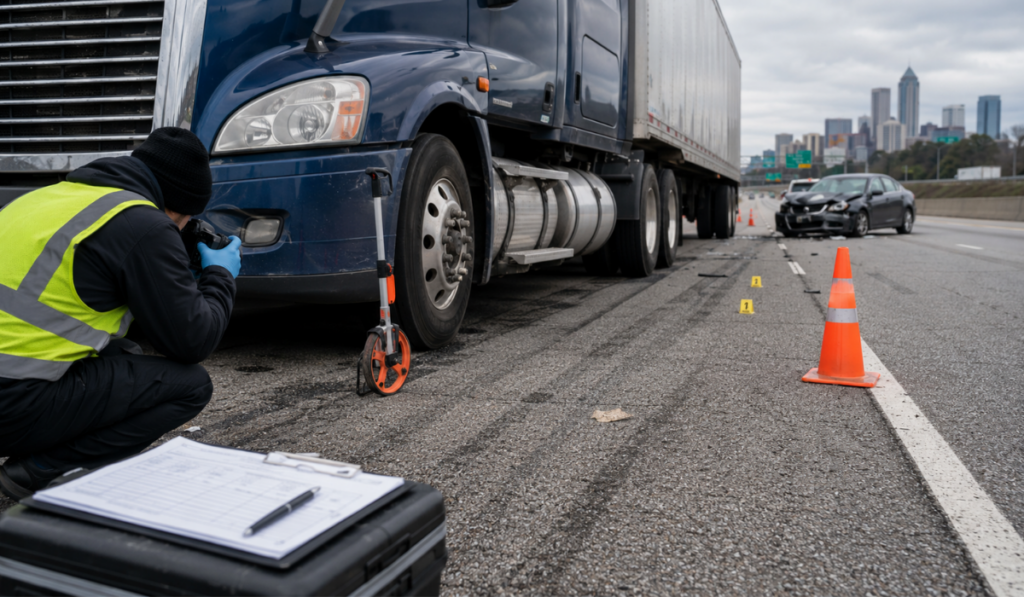
Truck Accident Lawyer

Who Should You Call After a Truck Accident in Duluth, GA, in 2026?

After a truck accident in Duluth, call 911 first, obtain medical care, report the collision to your insurer, and contact a truck accident attorney in Duluth before providing detailed statements to the trucking company’s insurer. Acting quickly can protect your health and preserve electronic records, video, driver logs, and other evidence that may identify every responsible party.

Georgia generally allows two years to file a personal injury lawsuit, although exceptions can shorten or extend the deadline. A claimant who is 50% or more at fault generally cannot recover damages under Georgia’s modified comparative-fault law.

Commercial truck cases can also involve federal regulations and evidence-retention requirements. Motor carriers generally must retain electronic logging device records for six months, while federal hours-of-service rules generally permit property-carrying drivers to drive for up to 11 hours after 10 consecutive hours off duty, subject to additional limits and exceptions.

Finch McCranie LLP reports more than 50 years of experience litigating truck and tractor-trailer cases.

A collision involving a tractor-trailer, tanker, box truck, construction vehicle, or delivery van may require a more extensive investigation than an ordinary passenger-vehicle crash. The order in which you make calls can affect both your immediate safety and your ability to document what happened.

Quick Facts After a Duluth Truck Accident

  • First call: Call 911 when anyone may be injured or the crash creates a roadway hazard.
  • Medical care: Obtain appropriate medical attention before focusing on insurance or liability.
  • Evidence: Trucking records, electronic data, video, and other evidence may be time-sensitive.
  • ELD records: Motor carriers generally must retain electronic logging device records and supporting documents for six months.
  • Driving limit: Property-carrying commercial drivers generally may drive for up to 11 hours after 10 consecutive hours off duty, subject to other federal requirements and exceptions.
  • Georgia deadline: Personal injury lawsuits are generally subject to a two-year limitation period, although exceptions may apply.
  • Comparative fault: A claimant who is 50% or more responsible generally cannot recover damages.

Who Should You Call Immediately After a Truck Accident in Duluth?

Call 911 first, obtain appropriate medical care, notify your insurance company, and then contact a truck accident attorney in Duluth as soon as reasonably possible. Do not let calls about insurance or liability delay emergency treatment.

Your first calls should generally follow this order:

  1. Call 911. Report the crash, request law enforcement, and ask for emergency medical assistance when anyone may be injured.
  2. Contact a healthcare provider. Accept emergency transportation when needed or arrange a prompt examination.
  3. Notify a trusted family member. Ask for help with transportation, photographs, personal belongings, or communications.
  4. Report the crash to your insurer. Provide the basic facts required by your policy, but avoid speculation about fault.
  5. Call a truck accident attorney. Early legal involvement may help preserve records held by the driver, motor carrier, maintenance contractor, or other businesses.

Duluth drivers may encounter heavy commercial traffic around Interstate 85, Pleasant Hill Road, Sugarloaf Parkway, Buford Highway, and routes serving nearby distribution and commercial areas. When a crash obstructs an active roadway, remain in a safe location and follow instructions from emergency personnel.

Why Should You Contact a Truck Accident Attorney Quickly?

You should contact a truck accident attorney quickly because trucking evidence can be controlled by private companies and may be retained for only a limited period. Early action allows an attorney to identify potential evidence and send preservation demands before records are routinely deleted, overwritten, repaired, or lost.

Federal rules generally require motor carriers to retain electronic logging device records and supporting documents for six months. Other evidence, including onboard video, dispatch communications, telematics, inspection documents, and vehicle data, may follow different retention policies.

A Truck Accident Investigation May Examine:

  • The truck driver’s hours and rest periods
  • Electronic logging device data
  • Engine control module or event data recorder information
  • Dash-camera and nearby surveillance footage
  • Driver qualification and training records
  • Pre-trip and post-trip inspection reports
  • Maintenance and repair history
  • Dispatch instructions and delivery schedules
  • Cargo loading and securement documents
  • Drug and alcohol testing records
  • Cellphone activity when legally obtainable

A Duluth truck accident lawyer can also determine whether state law, federal motor-carrier regulations, or both apply to the collision.

Injured in a Truck Accident in Duluth?

Speak with Finch McCranie LLP about preserving trucking records, identifying responsible parties, and understanding your legal options.

What Should You Do Before Leaving the Accident Scene?

Before leaving the scene, prioritize safety, obtain medical assistance, exchange required information, and document the crash only if you can do so without risking further injury. Do not step into moving traffic or approach an unstable commercial vehicle to obtain photographs.

Truck Accident Scene Checklist

  • Move to a safe location if instructed by emergency personnel.
  • Photograph the positions of the vehicles.
  • Capture damage to every involved vehicle.
  • Photograph skid marks, debris, road signs, traffic signals, and visible cargo.
  • Record the truck’s company name, unit number, license plate, and USDOT number.
  • Obtain the driver’s name, employer, and insurance information.
  • Collect names and contact information from witnesses.
  • Tell responding officers about pain, dizziness, confusion, or other symptoms.
  • Obtain the police report number.
  • Keep damaged personal property, clothing, and vehicle components.
  • Avoid posting crash details or photographs on social media.

You should not admit fault or guess about speed, distance, or events you did not clearly observe. Georgia’s comparative-fault law can reduce compensation according to a claimant’s assigned percentage of responsibility and generally prevents recovery when the claimant is 50% or more responsible.

What Evidence Should Be Preserved After a Commercial Truck Crash?

The most important evidence can include electronic vehicle data, driver logs, video, physical evidence, corporate records, medical documentation, and proof of financial losses. A police report is important, but it may not contain the technical or corporate evidence needed to evaluate the entire case.

Evidence What It May Help Establish Why Timing Matters
Electronic logging records Driving time, rest periods, and possible hours-of-service violations Federal retention is generally six months
Engine or event data Speed, braking, throttle, and other vehicle activity Data may be overwritten or lost during repairs
Dash-camera video Vehicle movement and events before impact Company retention policies vary
Inspection and maintenance files Brake, tire, lighting, and mechanical conditions Repairs can change the vehicle’s condition
Dispatch communications Delivery pressure, routing, and driver instructions Digital communications may be routinely deleted
Cargo records Weight, loading, and securement responsibility Multiple contractors may possess the records
Medical records Injury diagnosis, treatment, and prognosis Treatment gaps may become disputed
Wage and employment records Lost income and reduced earning capacity Past records are often easier to collect promptly

A detailed investigation may reveal evidence that was not included in the initial crash report. Reconstruction evidence, corporate records, electronic information, and expert analysis may all affect the determination of fault.

If you or a family member was injured in a Duluth truck crash, call Finch McCranie LLP at (404) 658-9070 to discuss evidence preservation and your legal options.

Who May Be Responsible for a Truck Accident?

The truck driver may be responsible, but liability can also extend to a motor carrier, vehicle owner, maintenance provider, cargo company, broker, manufacturer, or another road user. The legally responsible parties depend on employment relationships, contracts, vehicle ownership, safety practices, and the cause of the collision.

Potentially Responsible Parties Can Include:

  • A driver who was speeding, distracted, impaired, fatigued, or following too closely
  • A trucking company that used unsafe hiring, supervision, scheduling, or maintenance practices
  • A vehicle owner that failed to maintain the truck
  • A repair contractor that performed defective work
  • A shipper or loading company that overloaded or improperly secured cargo
  • A parts manufacturer responsible for a defective component
  • Another driver whose conduct contributed to a multivehicle crash
  • A government entity responsible for a dangerous road condition, subject to special notice rules and deadlines

Commercial arrangements are not always obvious from the logo displayed on the truck. The driver, vehicle, trailer, cargo, and operating authority may be connected to different businesses.

An independent investigation may therefore be necessary before determining who should receive a claim notice or become a defendant.

How Is a Truck Accident Claim Different From a Car Accident Claim?

A truck accident claim commonly involves more evidence, more potential defendants, federal safety rules, larger insurance policies, and more serious injuries than a routine car accident claim. Treating the case as a simple two-driver insurance dispute can leave important sources of responsibility unexplored.

Issue Typical Car Accident Commercial Truck Accident
Potential parties Usually one or two drivers Driver, carrier, owner, loader, maintenance company, manufacturer, or others
Governing rules Primarily state traffic and insurance laws State law plus potentially applicable federal trucking regulations
Technical evidence Photos, police report, witnesses, and vehicle damage Logs, telematics, engine data, inspections, dispatch records, and cargo files
Injury exposure Varies widely Greater potential for catastrophic or fatal injuries due to vehicle size and weight
Defense response Personal auto insurer Commercial insurers, company representatives, investigators, and defense counsel
Damages analysis Medical bills, wages, property loss, and pain and suffering May also involve life-care planning, future treatment, disability, and earning capacity

The Federal Motor Carrier Safety Administration regulates areas such as driver qualifications, hours of service, vehicle inspections, and recordkeeping for covered interstate motor carriers. For example, property-carrying drivers generally may drive for up to 11 hours following 10 consecutive hours off duty, subject to other limits and exceptions.

Was a Commercial Truck Involved in Your Crash?

Truck accident claims may involve multiple companies, insurers, federal records, and time-sensitive electronic evidence.

What Does It Cost to Hire a Truck Accident Attorney?

Truck accident attorneys frequently accept injury cases on a contingency-fee basis, meaning the legal fee is generally calculated as an agreed percentage of the recovery rather than an hourly charge.

The written agreement should explain the percentage, litigation expenses, responsibility for costs, and what happens if there is no recovery.

Cost is only one part of the hiring decision. During a consultation, ask:

  • Does the attorney regularly handle commercial trucking cases?
  • Who will manage the case and communicate with you?
  • How will investigators and experts be selected and funded?
  • Does the agreement use a different percentage if litigation begins?
  • Are case expenses deducted before or after the fee is calculated?
  • Who is responsible for expenses if the case is unsuccessful?
  • Is the attorney prepared to file suit and try the case?
  • How often will you receive updates?

Bring the crash report number, insurance correspondence, photographs, medical information, and any records of missed work to your consultation.

To request a consultation and review the applicable fee terms, contact Finch McCranie LLP at (404) 658-9070.

Which Truck Accident Myths Can Hurt Your Claim?

Common truck-accident myths can lead people to delay treatment, surrender evidence, underestimate future losses, or accept an early offer before the full consequences are known.

Decisions should be based on the evidence and terms of a proposed settlement, not assumptions about how insurance claims work.

Myth Fact
The police report makes the final decision about fault. A report is evidence, but insurers, attorneys, judges, and juries may evaluate additional evidence.
The trucking company will preserve everything automatically. Some records have limited retention periods, so a prompt preservation request may be important.
No immediate pain means no injury. Certain symptoms may appear later, but only a qualified medical professional can diagnose an injury.
The company whose logo appears on the truck is always the only defendant. The driver, carrier, owner, loader, maintenance provider, or another business may have separate roles.
An early settlement can be reopened if treatment becomes more expensive. A signed release generally ends the covered claim, subject to its language and applicable law.
Every truck accident case goes to trial. Many claims settle, but litigation may be necessary when liability or damages remain disputed.

Serious crash injuries may affect employment, mobility, family responsibilities, and future medical needs. Long-term consequences should therefore be considered before resolving a claim.

How Does a Truck Accident Claim Usually Proceed?

A truck accident claim generally progresses from immediate investigation and medical assessment to liability analysis, damages documentation, negotiations, and, when necessary, litigation.

There is no universal completion date because the timeline depends on medical recovery, the number of defendants, disputed facts, available evidence, and court scheduling.

A Typical Truck Accident Claim May Include:

  1. Initial consultation: The attorney reviews known facts, deadlines, insurance information, and possible defendants.
  2. Evidence preservation: Written notices request that relevant vehicles, electronic data, video, logs, and company records be retained.
  3. Independent investigation: Lawyers collect reports, photographs, witness accounts, corporate records, and technical evidence.
  4. Medical evaluation: Treatment records help establish diagnosis, causation, prognosis, restrictions, and future needs.
  5. Liability analysis: Evidence is compared with Georgia law, contracts, company policies, and applicable federal regulations.
  6. Damages calculation: The claim may include medical expenses, lost income, reduced earning capacity, property damage, pain and suffering, and future losses supported by evidence.
  7. Demand and negotiation: The responsible parties and insurers receive a documented settlement demand.
  8. Litigation when needed: A lawsuit may involve written discovery, depositions, expert analysis, motions, mediation, and trial preparation.
  9. Resolution: The case concludes through a settlement, court ruling, or jury verdict.

Georgia generally provides two years for actions involving personal injuries, but special circumstances can affect the calculation. Claims involving government entities may also carry much shorter notice requirements.

The applicable deadline should therefore be reviewed for the specific accident rather than calculated from a general rule alone.

What Should You Do Next After a Duluth Truck Accident?

Protect your health first, preserve every available record, and obtain case-specific legal advice before signing releases or accepting a final settlement.

A prompt investigation can clarify whether the driver alone caused the crash or whether company practices, poor maintenance, defective equipment, or improper cargo handling also contributed.

Keep One Organized File Containing:

  • Crash photographs and videos
  • The police report and incident number
  • Medical bills and treatment records
  • Insurance letters, emails, and claim numbers
  • Prescription and travel expenses
  • Pay stubs and missed-work documentation
  • Notes describing symptoms and daily limitations
  • Contact information for witnesses
  • Copies of every document you sign

Conclusion

After a truck accident in Duluth, the first call should be to emergency services when safety or health is at risk. Once immediate medical needs are addressed, contacting a truck accident attorney in Duluth can help preserve time-sensitive evidence, identify responsible parties, manage insurer communications, and evaluate present and future losses.

Finch McCranie LLP reports more than 50 years of experience litigating truck and tractor-trailer cases. Call (404) 658-9070 to speak with the firm about a truck, tractor-trailer, tanker, box truck, or delivery-vehicle accident in Duluth.

Talk to Finch McCranie LLP About Your Duluth Truck Accident

Discuss evidence preservation, responsible parties, insurance issues, and potential next steps with an experienced Georgia trial firm.

Call (404) 658-9070

FAQ’s

Should I Call 911 If the Truck Accident Appears Minor?

Yes. Call 911 when anyone may be injured, traffic is obstructed, a vehicle creates a hazard, or emergency help is needed. Some injuries are not immediately obvious, and an official response can help document the collision.

Should I Speak With the Trucking Company’s Insurance Adjuster?

You may need to cooperate with your own insurer under your policy, but you are not required to speculate or accept an immediate settlement from another party’s insurer. Consider obtaining legal advice before giving a recorded statement or signing a medical authorization or release.

Can I Bring a Claim If I Was Partially Responsible?

You may still pursue compensation if you were less than 50% responsible for the truck accident. Under Georgia’s modified comparative-fault rule, compensation can be reduced according to your percentage of responsibility.

If you are found 50% or more at fault, you generally cannot recover damages.

How Long Do I Have to File a Truck Accident Lawsuit in Georgia?

Georgia generally allows two years from the date of injury to file a personal injury lawsuit. However, claims involving government entities or other special circumstances may have different notice requirements or deadlines.

An attorney should review the specific facts promptly to determine the applicable filing period.

What Happens If a Delivery Truck Caused the Accident?

A delivery-truck accident may create potential liability for the driver, employer, delivery contractor, vehicle owner, maintenance provider, or another company involved in the delivery operation.

Determining responsibility may require reviewing employment relationships, contracts, vehicle ownership, insurance coverage, and the level of control each company exercised over the driver.

Which Companies Can Be Held Responsible for a Truck Accident?

Several companies may share responsibility for a commercial truck accident. Potentially liable parties can include the motor carrier, tractor or trailer owner, cargo-loading company, maintenance provider, shipping company, parts manufacturer, or another contractor.

The evidence must show how each party’s actions or failures contributed to the collision.

How Long Does a Truck Accident Case Usually Take?

A truck accident case may take several months or longer, depending on the injuries, number of potentially responsible parties, available evidence, and whether liability is disputed.

Cases involving catastrophic injuries, multiple insurers, extensive discovery, or a trial generally take longer than claims resolved through earlier negotiations.

What Should I Bring to My First Meeting With a Truck Accident Attorney?

Bring the police report or incident number, crash photographs, witness details, insurance correspondence, medical records, bills, employment documents, and a written timeline of the accident.

You should also bring copies of messages from insurers or trucking companies. If some documents are unavailable, you can still schedule the consultation and provide them later.

Legal Disclaimer: This article provides general information and is not legal advice. Truck accident liability, evidence-retention requirements, filing deadlines, damages, and procedural requirements depend on the facts of each case. Contact a qualified Georgia attorney for advice regarding your individual circumstances.
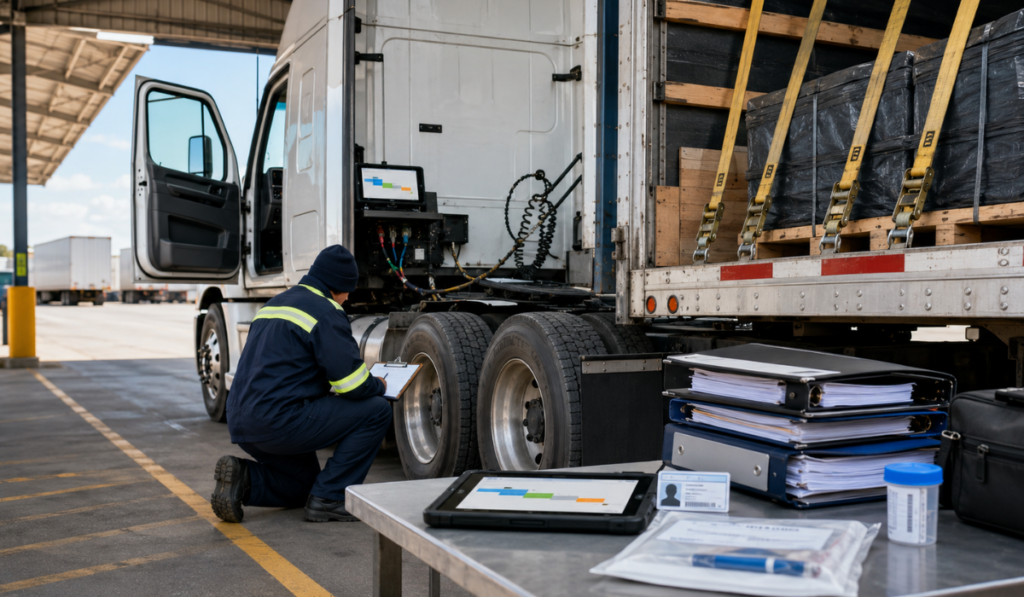

Do You Need a Truck Accident Lawyer After a Serious Crash?

You should strongly consider speaking with a truck accident lawyer in Smyrna after a serious truck accident in Smyrna, especially when you suffered significant injuries, responsibility is disputed, or a commercial carrier is involved. An attorney can preserve trucking records, identify responsible parties, calculate damages, and handle communications with commercial insurers.

A fully loaded tractor-trailer may weigh up to 80,000 pounds. Federal rules generally allow a property-carrying driver to drive for up to 11 hours after 10 consecutive hours off duty. The driver generally cannot drive beyond the 14th consecutive hour after coming on duty.

Georgia personal injury actions generally must be filed within two years, although exceptions may change the deadline. FMCSA reported approximately 120,000 large trucks involved in injury crashes nationwide in 2022.

Quick Facts About Serious Truck Accidents

  • Truck weight: A fully loaded tractor-trailer may weigh up to 80,000 pounds.
  • Driving limit: Property-carrying drivers generally may drive for up to 11 hours after 10 consecutive hours off duty.
  • 14-hour rule: A driver generally cannot drive beyond the 14th consecutive hour after coming on duty.
  • Georgia filing period: Personal injury actions generally must be filed within two years, although exceptions may apply.
  • Comparative fault: Recovery is generally barred if the claimant is 50% or more responsible.
  • Evidence: Electronic truck data, driver logs, video, maintenance files, and corporate records may be important.

When Is a Truck Accident Lawyer Necessary in Smyrna?

Legal representation may be particularly important when a Smyrna truck accident causes serious injuries, involves disputed fault, or requires evidence controlled by a commercial trucking company.

Consider speaking with a lawyer when:

  • Someone suffered a serious or potentially permanent injury.
  • Medical treatment or time away from work is ongoing.
  • Responsibility for the collision is disputed.
  • The insurer alleges that you contributed to the crash.
  • An 18-wheeler, tractor-trailer, delivery truck, tanker, or company vehicle was involved.
  • Multiple companies may share responsibility.
  • The trucking company controls electronic or physical evidence.
  • A family member died in the collision.
  • An insurer requests a recorded statement or broad medical authorization.
  • A settlement is offered before the medical prognosis is clear.

A truck accident attorney can evaluate applicable Georgia law, preserve evidence, investigate corporate relationships, communicate with insurers, and determine whether litigation is appropriate. Finch McCranie LLP also explains why you may need a truck accident lawyer after a serious commercial vehicle crash.

Why Are Truck Accident Claims Different From Car Accident Claims?

Truck accident claims are often more complicated because they may involve federal safety regulations, commercial insurance, corporate records, electronic data, severe injuries, and several potentially responsible parties.

A passenger-car case commonly focuses on the conduct of one or two drivers. A commercial truck case may also require an investigation into the motor carrier, vehicle owner, cargo loader, maintenance contractor, freight company, or parts manufacturer.

Issue Passenger-Car Collision Commercial Truck Collision
Potential defendants Usually one or more drivers Driver, carrier, owner, loader, maintenance provider, manufacturer, or others
Key records Police report, photographs, and medical records Driver logs, dispatch data, inspection files, GPS records, black box data, and company policies
Governing rules Primarily state traffic and negligence law State law plus applicable federal motor-carrier regulations
Insurance Personal automobile policy One or more commercial policies may apply
Injury exposure Varies by impact Frequently serious because of vehicle size and weight
Investigation Often vehicle and witness focused May require corporate discovery and technical experts

A loaded tractor-trailer can weigh up to 80,000 pounds, compared with roughly 4,000 pounds for many passenger vehicles. This substantial difference can increase the force of a collision and the risk of catastrophic injury. Learn more about commercial trucking claims on Finch McCranie LLP’s Georgia truck accident lawyer page.

Smyrna’s road system adds a meaningful local dimension. The city is connected to I-75, I-285, Cobb Parkway, Atlanta Road, and South Cobb Drive. Heavy commercial traffic on these routes can make truck crashes especially complicated when multiple vehicles, carriers, or businesses are involved.

What Should I Do Immediately After a Smyrna Truck Accident?

After a truck crash, prioritize emergency care, report the collision, document what you safely can, and avoid making statements about fault before the evidence has been reviewed.

Immediate-Response Checklist

  • Call 911 and request medical and law-enforcement assistance.
  • Move out of active traffic if it is safe and legally appropriate.
  • Obtain medical evaluation, even if pain initially seems manageable.
  • Photograph the vehicles, license plates, road conditions, debris, and visible injuries.
  • Record the truck’s company name, unit number, license plate, and USDOT number.
  • Collect witness names and contact information.
  • Do not argue about fault at the scene.
  • Do not post crash details or photographs on social media.
  • Keep medical bills, repair estimates, receipts, and employment records.
  • Contact a truck accident lawyer before signing a release.

An accident report can become an important part of an insurance claim, but the report is only one source of evidence and may not resolve every factual or legal dispute.

Seriously Injured in a Smyrna Truck Accident?

Finch McCranie LLP can review the collision and help determine what trucking records, electronic data, and other evidence may need to be preserved.

What Evidence Can Help Prove a Truck Accident Claim?

A strong truck accident claim may require physical, electronic, medical, employment, and corporate evidence showing how the crash occurred and how it affected the injured person.

Evidence Category Examples
Scene documentation Police reports, photographs, roadway measurements, tire marks, debris patterns, and witness statements
Electronic evidence Event data recorder information, engine-control-module data, GPS history, dash-camera video, and electronic logging device records
Driver records Qualifications, training, driving history, drug and alcohol testing, hours-of-service logs, and dispatch communications
Vehicle records Inspection reports, maintenance schedules, repair invoices, brake records, and tire information
Company records Hiring procedures, safety policies, delivery schedules, contracts, and prior regulatory records
Damages evidence Medical records, bills, wage statements, employment files, photographs, and documentation of daily limitations
Expert analysis Accident reconstruction, engineering, medical opinions, vocational analysis, and life-care planning when appropriate

Electronic information may be overwritten, surveillance footage may be deleted, and damaged vehicles may be repaired or released. A preservation letter can instruct relevant parties to retain identified evidence while the claim is investigated.

For a more detailed explanation, see Finch McCranie LLP’s guide, What Evidence Is Needed in a Truck Accident Case?

You can also read Commercial Truck Accidents: Understanding Your Rights with a Lawyer’s Guidance for additional information about evidence, liability, and legal rights following a commercial truck collision.

Who Could Be Responsible for the Collision?

Responsibility may extend beyond the truck driver when a company’s hiring, supervision, scheduling, maintenance, loading, or operational decisions contributed to the crash.

Potentially Responsible Parties Include:

  • The commercial driver
  • The driver’s employer
  • A motor carrier using an independent contractor
  • The truck or trailer owner
  • A maintenance or repair company
  • A cargo-loading business
  • A freight or logistics company
  • A manufacturer or parts supplier
  • Another driver who contributed to the collision
  • A government entity responsible for a dangerous road condition, depending on the facts

The correct defendants cannot be determined solely from a logo on the truck. Contracts, employment records, vehicle registrations, operating authority, insurance policies, dispatch records, and the companies’ actual control over the work may all matter.

Finch McCranie LLP’s guide on how a truck accident lawyer can help with a crash, insurance claim, compensation, and complex trucking laws provides additional information about how liability and damages may be investigated.

Georgia also uses a comparative-fault framework. A claimant’s damages may be reduced according to the claimant’s percentage of fault, and recovery is generally barred if the claimant is 50% or more responsible. Fault may also be apportioned among responsible parties or nonparties when applicable.

What Compensation May Be Available After a Truck Accident?

Compensation depends on the evidence of fault and the specific losses caused by the collision, not on a fixed truck accident settlement formula.

A tractor-trailer accident injury claim may include:

  • Emergency transportation and hospital care
  • Surgery, rehabilitation, medication, and follow-up treatment
  • Reasonably necessary future medical expenses
  • Lost wages
  • Reduced future earning capacity
  • Property damage
  • Physical pain and suffering
  • Emotional distress
  • Permanent disability, scarring, or disfigurement
  • Loss of consortium when legally available
  • Funeral and estate-related losses in a fatal case
  • Punitive damages in limited cases involving legally qualifying misconduct

The value cannot be evaluated responsibly until the lawyer understands liability, available coverage, medical prognosis, future treatment, income loss, and any allegation of comparative fault.

A commercial insurer may make an early offer before the full medical consequences are known. Accepting a settlement normally requires signing a release, which can end the claim even if additional treatment becomes necessary. The decision should therefore account for future losses, not only current bills.

Received a Settlement Offer After a Truck Crash?

Before signing a release, consider whether the offer accounts for ongoing treatment, future medical needs, lost income, and other supported losses.

How Long Does a Georgia Truck Accident Claim Take?

A truck accident claim can take several months or longer than a year, depending on medical recovery, disputed liability, the number of defendants, insurance negotiations, and whether a lawsuit is filed.

Stage Typical Activity
Immediate response, days 1 to 14 Medical care, crash documentation, insurer notification, and evidence-preservation requests
Investigation, weeks 1 to 12 or longer Records are collected, witnesses interviewed, vehicles inspected, and corporate relationships reviewed
Medical assessment Diagnosis, treatment needs, restrictions, and prognosis become clearer
Claim preparation and negotiation A demand may be submitted when damages can be evaluated with reasonable confidence
Litigation, when necessary Complaint, discovery, depositions, expert analysis, motions, mediation, and trial preparation

Georgia generally requires actions for injuries to the person to be brought within two years after the claim accrues. Shorter notice requirements or different deadlines may apply in some cases, particularly when a government entity is involved.

The two-year period should not be treated as permission to delay an investigation because important video, electronic records, physical evidence, and witness recollections may disappear much sooner.

How Much Does a Truck Accident Lawyer Cost?

Many truck accident lawyers use a contingency-fee arrangement, meaning the attorney’s fee is generally collected from a recovery rather than charged as an upfront hourly fee.

The exact percentage, responsibility for litigation expenses, and treatment of costs should be explained in a written agreement before representation begins.

Questions to Ask About Fees

  • What percentage applies if the claim settles?
  • Does the percentage change after a lawsuit is filed?
  • Who advances expert, filing, deposition, and records expenses?
  • How are expenses handled if there is no recovery?
  • Will deductions be calculated before or after case expenses?
  • Who will supervise the matter and communicate with the client?

At Finch McCranie LLP, we charge no legal fee unless we recover compensation for the client. Prospective clients should still review the complete engagement agreement and ask questions about fees and expenses before signing.

Before accepting an insurance offer or signing a release, call Finch McCranie LLP at (404) 658-9070 to request a consultation about your Smyrna truck accident claim.

What Are the Common Myths About Hiring a Truck Accident Lawyer?

Common truck accident myths can cause injured people to underestimate the evidence, deadlines, and financial issues involved in a commercial claim.

Myth Fact
The police report decides who wins the case. The report may be important, but other evidence and applicable law determine civil liability.
The company logo identifies the only responsible business. Ownership, employment, leasing, maintenance, cargo, and logistics relationships may reveal other parties.
Feeling fine at the scene means there is no injury. Some symptoms become noticeable later, so prompt medical assessment matters.
The insurer will automatically include future losses. Future treatment and income loss require documentation and careful evaluation.
A lawyer can guarantee a settlement amount immediately. Claim value depends on facts that may not be known during the initial consultation.
There is no urgency because Georgia provides two years. Electronic records, video, vehicle conditions, and witness recollections may be lost much sooner.

FMCSA’s hours-of-service rules illustrate why a commercial claim may require more than ordinary crash evidence. Property-carrying drivers are generally limited to 11 hours of driving after 10 consecutive hours off duty and may not drive beyond the 14th consecutive hour after coming on duty, subject to detailed rules and exceptions.

How Should I Choose a Smyrna Truck Accident Lawyer?

Choose a lawyer based on relevant trucking-case experience, investigative capacity, communication, fee transparency, and readiness to litigate when a fair resolution cannot be reached.

Smyrna Truck Accident Lawyer Checklist

  • Has the lawyer handled serious commercial truck cases?
  • Does the lawyer understand FMCSA regulations?
  • Can the legal team preserve and analyze electronic truck data?
  • Will it investigate every potentially responsible company?
  • Does it have access to qualified reconstruction and medical experts?
  • Has the lawyer taken complex injury cases to trial?
  • Who will provide updates and answer questions?
  • Are the contingency fee and expenses explained clearly?
  • Does the lawyer avoid guaranteeing a result?
  • Do you feel comfortable discussing sensitive medical and financial details?

Searching for a “truck accident lawyer near me” may produce many options, but proximity alone does not establish relevant experience. A commercial 18-wheeler accident lawyer should be able to explain the difference between an ordinary car claim and litigation involving a regulated carrier.

You can also review Finch McCranie LLP’s guide to everything you should know about hiring a truck accident attorney.

Delivery-vehicle cases may raise additional questions about contractor relationships, ownership, logistics platforms, and employer control. What Does a Commercial Delivery Truck Accident Lawyer Do? explains how these cases may be investigated.

What Should I Do Next After a Serious Truck Crash?

After addressing immediate medical needs, preserve your records and obtain legal advice before making decisions that could permanently affect the claim.

A Smyrna truck accident may involve evidence controlled by several businesses, competing accounts of fault, and injuries that take time to evaluate. Acting promptly can help preserve electronic data and clarify which insurance policies and legal rules may apply.

Finch McCranie LLP represents people throughout Georgia in serious truck accident matters and has handled commercial trucking cases for decades. Learn more about how Finch McCranie LLP handles complex truck accident claims.

A consultation can help determine whether representation is needed and what next steps fit the circumstances.

Talk to Finch McCranie LLP About Your Smyrna Truck Accident

Discuss the crash, evidence preservation, potentially responsible companies, insurance issues, damages, and your legal options.

Call (404) 658-9070

FAQ’s

Can I Handle a Truck Accident Insurance Claim Without a Lawyer?

You may handle your own claim, but serious commercial truck cases often involve evidence, regulations, companies, and insurance policies that are difficult to evaluate independently. Consider legal advice before giving a recorded statement, signing a medical authorization, or accepting a settlement.

When Should I Contact a Truck Accident Attorney?

Contact an attorney as soon as reasonably possible after receiving emergency medical care. Early involvement may help preserve electronic records, video, vehicle evidence, driver logs, and witness information.

What If I Was Partly Responsible for the Crash?

Partial fault does not automatically prevent recovery in Georgia. Damages may be reduced by your percentage of responsibility, but recovery is generally barred if you are 50% or more responsible.

Can the Trucking Company Be Responsible for Its Driver?

Yes, depending on the employment relationship and the circumstances. A company may also face direct claims involving negligent hiring, training, supervision, scheduling, inspection, or maintenance when supported by the evidence.

What If a Delivery Truck Caused the Accident?

A Georgia delivery truck injury lawyer may investigate the driver, employer, contractor, vehicle owner, maintenance provider, and logistics company. The businesses’ contracts and actual control over the delivery work may affect liability.

For more detail, see Finch McCranie LLP’s guide explaining what a commercial delivery truck accident lawyer does.

Should I Accept the Insurer’s First Settlement Offer?

Do not accept an offer until you understand the release terms and whether the amount accounts for future treatment, lost earning capacity, pain and suffering, and other supported losses. Once signed, a release usually ends the covered claim.

Where May a Smyrna Truck Accident Lawsuit Be Filed?

A case connected to Smyrna may be filed in an appropriate Cobb County court or another court with proper jurisdiction and venue. The correct location depends on the defendants, crash circumstances, claim type, and applicable procedural rules.

Legal Disclaimer: This article provides general information and is not legal advice. Truck accident liability, filing deadlines, evidence requirements, insurance coverage, damages, and procedural requirements depend on the facts of each case. Contact a qualified Georgia attorney for advice regarding your individual circumstances.

How a Truck Accident Lawyer Uses Federal Trucking Regulations to Build Your Claim

A truck accident lawyer may use federal trucking regulations to learn what happened before a commercial truck crash. 

These safety rules can show how long the driver worked, whether the truck was inspected, who loaded the cargo, and whether the trucking company hired a qualified driver.

Think of these regulations as a safety checklist. The lawyer compares that checklist with driver logs, electronic records, repair reports, company messages, and evidence from the accident scene.

Finding a broken rule can be important. However, it does not automatically prove a truck accident claim. The evidence must also show that the violation contributed to the crash and caused injuries or other losses.

Federal rules may apply differently depending on the truck, its cargo, the trip, and any legal exceptions. Georgia law can also affect responsibility, filing deadlines, damages, and other parts of the claim.

What Are Federal Trucking Regulations?

The Federal Motor Carrier Safety Administration, commonly called the FMCSA, regulates many commercial motor carriers and drivers operating in interstate commerce.

The Federal Motor Carrier Safety Regulations cover subjects such as:

  • How long a driver may work and drive
  • When a driver must rest
  • How driving time must be recorded
  • Driver licensing and qualification
  • Drug and alcohol testing
  • Vehicle inspection and maintenance
  • Cargo loading and securement
  • Company recordkeeping

However, not every truck is covered by the same rules. The regulations that apply may depend on:

  • The truck’s size and weight
  • The type of cargo being carried
  • Whether hazardous materials were involved
  • Whether the trip crossed state lines
  • The driver’s job and schedule
  • Whether a federal exception applies
  • Relevant Georgia transportation laws

A delivery van, passenger bus, dump truck, and tractor-trailer may have different requirements. A truck accident lawyer must first identify the vehicle and the kind of work it was performing.

Why Do These Rules Matter After a Truck Accident?

Federal trucking regulations help explain what the driver and trucking company were expected to do before the collision.

The rules can also show which records should exist. For example, a carrier may have driver logs, inspection reports, repair records, employment files, and cargo documents.

A lawyer may use those materials to answer several questions:

  • Was the driver allowed to operate the truck?
  • Had the driver worked too many hours?
  • Was a known mechanical problem repaired?
  • Was the cargo properly secured?
  • Did the company pressure the driver to meet an unsafe schedule?
  • Do the company’s records match information from outside sources?
  • Did a possible safety violation contribute to the crash?

A broken rule is only one piece of the puzzle. The lawyer must place that piece beside the other evidence to see how it fits.

Which Trucking Rules Can Affect a Claim?

Several groups of federal rules may become relevant during a commercial truck accident investigation.

Driver Hours and Required Rest

Hours-of-service rules limit how long many commercial drivers may work and drive. These rules are intended to help reduce the risk of tired drivers operating large vehicles.

The exact limits depend on the operation and any applicable exceptions. For example, the rules for a property-carrying driver may differ from those for a passenger-carrying driver. Short-haul operations and certain unusual driving conditions may also receive different treatment.

A truck accident lawyer may compare:

  • Electronic logging device records
  • Paper logs, when permitted
  • Dispatch instructions
  • GPS information
  • Fuel receipts
  • Toll records
  • Delivery schedules
  • Bills of lading
  • Phone records, when legally available

Imagine that a driver’s log says the truck was parked at 9:00 p.m. A fuel receipt or GPS record may show that the truck was still moving much later. 

That difference does not prove the entire claim, but it may require further investigation.

The FMCSA explains that hours-of-service rules control driving and on-duty time and require specified rest periods. Several exceptions and special provisions can change how the general rules operate. 

Electronic Logging Device Data

An electronic logging device, or ELD, connects with a truck’s engine and records information related to driving time.

Depending on the device and system, the records may include:

  • When the engine was running
  • When the vehicle was moving
  • Miles traveled
  • Engine hours
  • Changes in the driver’s duty status
  • Location information at required points
  • Edits and notes added to the log

Most drivers who must prepare records of duty status are required to use an ELD, but the rule includes limited exceptions. These may include certain short-haul drivers, some drive-away-tow-away operations, and limited use of paper logs.

An ELD does not record everything that happens inside a cab. It cannot, by itself, prove that a driver was sleepy, distracted, or careless. The lawyer must compare the electronic logging device data with other records and physical evidence.

According to the FMCSA, an ELD automatically records driving time and certain engine-related information. Carriers generally must retain ELD records of duty status and backup data for six months. 

Driver Qualifications and Training

A trucking company must use drivers who are properly qualified for the work they perform. A commercial truck accident lawyer may request the carrier’s driver qualification file and other employment records.

The investigation may examine:

  • Commercial driver’s license status
  • Employment applications
  • Driving history
  • Medical certification
  • Road-test documents
  • Training records
  • Prior safety violations
  • License suspensions
  • Drug and alcohol testing information

These records can help show what the company knew about the driver. They may also reveal whether required background checks or qualification steps were completed.

A prior traffic ticket does not automatically make a trucking company responsible for a later crash. The information becomes more important when it relates to the driver’s ability to operate the truck safely or shows that the company ignored a known risk.

Drug and Alcohol Testing

Federal regulations require testing in certain circumstances. Depending on the driver and operation, testing programs may include:

  • Pre-employment testing
  • Random testing
  • Reasonable-suspicion testing
  • Post-accident testing
  • Return-to-duty testing
  • Follow-up testing

A federal post-accident test is not required after every collision. Whether testing was required depends on the circumstances and the applicable rules.

A lawyer may examine whether the company had a proper testing program, whether required tests were completed, and whether the records show earlier violations. The lawyer must still connect any relevant failure to the collision.

Truck Inspection and Maintenance

Commercial trucks contain parts that must work together safely. A worn tire, damaged brake, broken light, or steering problem may make the vehicle harder to control.

Motor carriers have responsibilities involving inspection, repair, and maintenance. Records may cover:

  • Brakes and brake adjustments
  • Tires and wheels
  • Steering components
  • Lights and signals
  • Tractor-trailer connections
  • Reported defects
  • Periodic inspections
  • Maintenance schedules
  • Repairs completed before the crash

A lawyer may compare truck maintenance records with photographs, damaged parts, inspection reports, and expert findings.

For example, the company’s paperwork may say that a brake problem was repaired. An inspection of the truck may suggest that the defect remained. That conflict can help direct the investigation, but it must be evaluated carefully.

Cargo Loading and Securement

Cargo must be loaded and secured so it does not shift, fall, leak, or make the truck unstable.

A poorly balanced or unsecured load may contribute to:

  • A rollover
  • A jackknife
  • A lost-load collision
  • Difficulty braking
  • Loss of steering control
  • Trailer movement

Responsibility may depend on who loaded the cargo, who inspected it, and who controlled the transportation process. Possible parties could include the driver, motor carrier, shipper, loading company, or another business.

This does not mean every company connected to the shipment is responsible. Contracts, work assignments, regulatory duties, and evidence must show who controlled the relevant task.

How Does a Truck Accident Lawyer Investigate a Violation?

The investigation usually begins by identifying the truck, driver, carrier, cargo, route, and type of operation. These details help the lawyer determine which federal and Georgia rules may apply.

The lawyer may then take the following steps:

  1. Identify the applicable safety regulations.
  2. Send preservation notices to businesses holding relevant evidence.
  3. Request driver, dispatch, maintenance, and cargo records.
  4. Seek available ELD, GPS, camera, and engine data.
  5. Compare company records with information from independent sources.
  6. Examine missing, changed, or conflicting records.
  7. Consult qualified experts when technical analysis is necessary.
  8. Determine whether a violation contributed to the crash and injuries.

A preservation notice tells the recipient that certain evidence may relate to a legal claim and should not be destroyed. The notice can be important, but it does not guarantee that every record still exists or will be provided voluntarily.

What Evidence May Show That a Safety Rule Was Broken?

A truck accident lawyer may look for:

  • ELD and hours-of-service records
  • Driver qualification files
  • Dispatch messages
  • GPS and telematics data
  • Engine control module information
  • Dash-camera video
  • Inspection reports
  • Truck maintenance records
  • Repair invoices
  • Cargo documents
  • Bills of lading
  • Scale and weigh-station records
  • Drug and alcohol testing information
  • Company safety policies
  • Training and supervision records
  • Police reports
  • Crash-scene photographs
  • Witness statements
  • Physical evidence from the truck

Some materials may be obtained through an early request. Others may require formal discovery, a subpoena, a court order, or cooperation from a third party.

Who May Be Responsible for a Truck Accident?

The driver is not always the only party that must be examined. Depending on the evidence, a Georgia truck accident claim may involve:

  • The commercial driver
  • The motor carrier
  • The tractor or trailer owner
  • A leasing company
  • A repair or maintenance provider
  • A cargo-loading business
  • A shipper
  • A vehicle or parts manufacturer

Not every accident involves all these parties. Responsibility depends on what each person or business controlled, what duties applied, and how the collision happened.

Federal records can help uncover those relationships. A maintenance invoice may identify the company that repaired the brakes. A bill of lading may help identify who handled the cargo. Employment and leasing records may show who controlled the driver or vehicle.

Does a Federal Violation Automatically Prove Negligence?

A federal trucking violation may support a negligence claim, but it does not automatically prove the entire case.

The injured person generally must establish:

  • A legal duty existed
  • The duty was breached
  • The breach contributed to the collision
  • The collision caused injuries or recoverable losses

For example, a paperwork mistake that had no connection to the crash may have little effect on the claim. A driving-hours violation may be more important when other evidence shows that fatigue contributed to the driver losing control.

The legal effect of a violation depends on the regulation, the facts, and Georgia law.

What If the Trucking Company Says It Followed Every Rule?

The company’s statement is not the end of the investigation. A lawyer may test it by comparing internal records with information from unrelated sources.

An ELD entry may be compared with toll, GPS, fuel, and delivery records. A maintenance report may be compared with repair invoices and the condition of the damaged truck. Dispatch messages may show whether the company gave the driver a schedule that was difficult to complete safely.

Following federal regulations also does not always settle every question. Conduct may still be considered unsafe under the circumstances even when no specific federal violation is found.

Why Must Trucking Evidence Be Preserved Quickly?

Important records may be stored by the driver, carrier, maintenance shop, cargo company, technology provider, or another business. Different records can have different retention periods.

Some electronic information may also be overwritten during ordinary business operations. The damaged truck could be repaired, moved, or placed back into service.

Early preservation efforts can help protect relevant evidence. If a lawsuit is filed, formal discovery and court procedures may provide additional ways to obtain records.

How a Truck Accident Lawyer Helps Build the Claim

A truck accident lawyer can bring the evidence and regulations together in a clear order.

The lawyer may:

  • Determine which rules applied
  • Identify relevant people, companies, and insurance policies
  • Preserve time-sensitive records
  • Review driver and company documents
  • Investigate possible trucking company negligence
  • Consult accident reconstruction or trucking safety experts
  • Review mechanical, medical, and financial evidence
  • Connect a safety failure to the collision
  • Document medical expenses, lost income, and other losses
  • Address arguments raised by carriers and insurers
  • Prepare the matter for negotiation or litigation

Hiring a lawyer does not guarantee a settlement or particular result. The value of the legal work depends on the available evidence and the facts of the collision.

Learning What the Trucking Records May Show

Federal trucking regulations provide a useful map for investigating a commercial vehicle collision. They may show how the driver worked, how the truck was maintained, how the cargo was loaded, and what the motor carrier knew before the crash.

However, the rules must be applied to the specific vehicle, driver, company, and type of operation. Any possible violation must also be connected to the collision and the injuries being claimed.

People injured in truck accidents in Atlanta or Duluth can contact Finch McCranie LLP to discuss the available evidence and possible legal options. A truck accident lawyer can examine whether federal regulations and Georgia law may affect the claim.

Frequently Asked Questions

What federal agency regulates commercial trucking?

The Federal Motor Carrier Safety Administration regulates many commercial motor carriers and drivers. Other federal and state agencies may also oversee particular vehicles, cargo, or operations.

Do federal trucking regulations apply to every commercial vehicle?

Federal rules do not apply to every vehicle in the same way. Coverage can depend on the vehicle’s size, use, cargo, route, and whether an exception applies.

Can ELD data show whether a driver exceeded driving limits?

ELD data can help show when a truck was moving and how the driver recorded work and rest periods. A lawyer should compare it with dispatch, fuel, toll, GPS, and delivery records before reaching a conclusion.

How long do trucking companies keep driver and vehicle records?

The required period depends on the type of record and the rule governing it. For example, carriers generally retain ELD records of duty status for six months, while other driver and maintenance documents may have different requirements.

Can a trucking company be responsible for a driver’s violation?

A motor carrier may be responsible in some circumstances, particularly when its conduct, policies, supervision, or employment relationship contributed to the violation or collision. The answer depends on the evidence and applicable law.

This article provides general legal information and is not legal advice for any specific case.

Why You Need a Truck Accident Lawyer to Take On Big Trucking Insurance Policies

A truck accident lawyer regularly deals with insurance companies that cover large commercial trucks. 

This does not mean the lawyer has personal connections with these companies or can promise a larger payment. 

It means the lawyer understands how trucking insurance claims work, what questions to ask, and which documents to review.

The lawyer can identify the companies involved in the crash and determine which insurance policies may apply. 

They can request policy information, communicate with insurance adjusters, preserve important evidence, and review settlement offers. 

This support may help you avoid contacting the wrong insurer, providing unclear information, or signing documents you do not fullyUnderstanding the Complexity of Trucking Insurance Claims. 

What Is Commercial Trucking Insurance and How Does It Work?

Commercial trucking insurance is coverage designed to protect truck drivers, trucking companies, and other insured businesses from certain financial losses connected to commercial truck operations.

If a truck driver causes an accident while working, the insurance company investigates the claim. 

It reviews the policy, accident report, vehicle records, medical documents, and other available evidence. 

The insurer then determines whether the policy covers the accident and what amount may be payable for proven losses.

A commercial trucking policy may include different types of coverage, such as:

  • Liability coverage: May pay for another person’s injuries or property damage when the insured party is legally responsible.
  • Physical damage coverage: Helps cover damage to the insured truck or trailer.
  • Cargo coverage: May cover loss of or damage to goods being transported.
  • Uninsured or underinsured motorist coverage: May apply when another responsible driver has no insurance or insufficient coverage.
  • General liability coverage: May cover certain business-related incidents that do not arise directly from operating the truck.

A single accident may involve several policies because the tractor, trailer, cargo, and trucking operation may belong to different businesses. 

For example, one company might own the truck, another might employ the driver, and a third might load the cargo.

Finding an insurance policy does not mean the insurer will automatically pay a claim. 

The company must first decide whether the policy was active, whether it covers the people and vehicles involved, who may be responsible, and whether the claimed losses are supported by evidence. 

Policy limits also represent the most the insurer may pay under specific coverage, not a guaranteed settlement amount.

Why Are Commercial Truck Insurance Claims So Complicated?

A crash between two cars often involves two drivers and their insurance companies. A commercial truck accident may involve several people, businesses, and policies.

Depending on what happened, the parties could include:

  • The truck driver
  • The trucking company
  • The tractor owner
  • The trailer owner
  • A company leasing the truck
  • A truck maintenance business
  • A cargo-loading company
  • A vehicle or parts manufacturer

A “party” simply means a person or business that may have some legal responsibility for the crash.

For example, the driver may have made an unsafe turn. However, worn brakes may also have made it difficult to stop. In that situation, investigators may need to examine the driver’s actions, the trucking company’s safety practices, and the maintenance work performed on the truck.

Not every truck accident involves all these parties. The facts and evidence must show who may be responsible.

How May the Trucking Company’s Insurer Handle the Claim?

An insurance adjuster may contact the injured person shortly after the collision. An adjuster is the person who reviews the claim for the insurance company.

The adjuster may ask questions about the crash, injuries, medical history, work, and vehicle damage. The insurer may also:

  • Request a recorded statement
  • Ask for medical records
  • Send a medical authorization form
  • Request proof of missed work
  • Examine whether another party caused the crash
  • Question whether treatment is related to the collision
  • Make an early settlement offer

These actions do not automatically mean that the insurer is behaving unfairly. The insurance company has a duty to examine the claim. It also has a financial interest in limiting what it pays.

This difference in goals matters. The injured person wants enough support for proven losses. The adjuster evaluates what the insurer may legally owe under its policy.

A truck accident lawyer can handle these conversations and help the injured person avoid guessing, giving incomplete information, or signing something without understanding it.

How Can a Truck Accident Lawyer Help With the Insurance Process?

A truck accident lawyer does more than make telephone calls. The lawyer must understand the crash, locate the evidence, identify possible coverage, and clearly explain the claimed losses.

Building a Map of the Businesses and Insurance Policies

The first job is to learn who was connected to the truck.

A lawyer may review:

  • Carrier registration information
  • Vehicle ownership records
  • Insurance documents
  • Driver employment information
  • Leasing agreements
  • Cargo and shipping records
  • Maintenance contracts

This information creates a map of the people, companies, and policies that may be involved. Without that map, an injured person may send a claim to only one insurer and overlook another possible source of coverage.

Keeping Insurance Conversations Clear

Insurance questions may sound simple but require careful answers.

For example, an adjuster may ask, “How are you feeling?” The person might answer, “I’m okay,” simply to be polite. The insurer could later compare that response with a report of pain.

A lawyer can communicate with the adjusters and provide properly supported information. Legal help may also reduce the chance of:

  • Guessing about how the crash happened
  • Giving inconsistent answers
  • Signing an overly broad authorization
  • Accepting an offer without understanding it

The injured person may still have duties under their own insurance policy. The correct response can depend on who is asking, what is requested, and which policy applies.

Asking That Important Evidence Be Saved

Some truck accident evidence may not remain available forever.

Potential evidence may include:

  • Electronic logging device records
  • Event data recorder information
  • Dash-camera footage
  • Nearby surveillance video
  • Driver qualification records
  • Dispatch messages
  • Inspection reports
  • Maintenance documents
  • Cargo-loading records
  • Hours-of-service information

An electronic logging device, or ELD, records certain information about a driver’s working and driving time. Federal rules generally require motor carriers to keep ELD records and supporting documents for six months. 

Not every truck has the same devices or information. Different records may also have different retention periods. A lawyer may send a preservation letter asking the relevant parties to keep identified evidence.

Showing the Full Effect of the Injuries

An insurance claim needs proof. Saying that an injury caused financial difficulty may not be enough.

Depending on the case, a lawyer may collect:

  • Medical records and bills
  • Prescription costs
  • Rehabilitation records
  • Wage statements
  • Tax or employment documents
  • Information about missed work
  • Medical opinions about future care
  • Evidence of reduced earning ability

Not every person can claim every type of loss. The available compensation depends on the injuries, evidence, insurance coverage, and law.

A lawyer can organize the records so the insurer can see how the amount being requested was calculated.

Checking an Offer Before the Claim Is Closed

An insurance company may offer a settlement before medical treatment is complete.

A settlement is an agreement to end a legal claim in return for payment. It usually requires the injured person to sign a release. A release is a document giving up certain rights to bring further claims against the people or businesses named in it.

A quick offer is not automatically unfair. However, it should be reviewed carefully.

The injured person may not yet know:

  • Whether more treatment will be needed
  • How long recovery will take
  • Whether the injury will affect future work
  • Whether another insurance policy applies
  • Which people or businesses the release covers

A truck accident lawyer can compare the offer with the available evidence and explain what rights would end after the release is signed.

Preparing for Negotiation or a Lawsuit

Once the evidence and losses are organized, a lawyer can present the claim to the correct insurers.

The lawyer may explain:

  • How the collision occurred
  • Who may be legally responsible
  • Which evidence supports the claim
  • How the injuries affected the client
  • How the requested amount was calculated

The insurer may accept, reject, or negotiate the demand. If the disagreement cannot be resolved, the lawyer may recommend filing a lawsuit.

Some claims settle without a trial. Others require court action. Hiring a lawyer does not guarantee a particular result.

When Should You Contact a Truck Accident Lawyer?

Early legal guidance may be helpful if you suffered serious injuries, responsibility is disputed, multiple companies or insurers are involved, an adjuster requests a recorded statement, or you receive a quick settlement offer. 

A lawyer can also help when important electronic records or video may need to be preserved or when insurance policies and release documents are difficult to understand.

If you were involved in a commercial truck accident in Atlanta or Duluth, Finch McCranie LLP can review the circumstances of your claim, explain potential insurance issues, and discuss the legal options that may be available. You do not need to understand every insurance rule before seeking guidance.

Frequently Asked Questions

Can several insurance companies be involved in one truck accident claim?

Yes, different policies may cover the driver, motor carrier, tractor, trailer, cargo business, or another responsible company. Whether a policy applies depends on the facts and its terms.

Should I give the trucking insurer a recorded statement?

Be careful before giving one. Your duties may depend on which insurer is asking and which policy applies. Consider getting legal advice before providing a detailed recorded account.

What if the insurer offers a quick settlement?

Read the offer and release carefully. Make sure you understand your injuries, expenses, possible future needs, and the rights you would give up. Signing a release generally closes the covered claim against the released parties.

Should I sign a medical authorization from an insurance company?

Review the authorization carefully before signing it. Find out what medical records it allows the insurer to obtain and how far back the authorization reaches. Consider getting legal advice if you are unsure about its scope. 

What a Truck Accident Lawyer Wants You to Do First

A Truck Accident Lawyer may advise you that the first steps after a commercial truck collision can affect your health, the availability of evidence, and your ability to understand your legal options.

A crash involving a tractor-trailer, delivery vehicle, or another large commercial truck can leave you confused about what to do next. You may be injured, your vehicle may be severely damaged, and several insurance representatives may begin asking questions.

Your immediate priorities should be staying safe, obtaining medical care, reporting the collision, and preserving available information. 

The following steps explain what to do during the first minutes, hours, and days after a truck accident.

Protect Yourself and Others From Immediate Danger

Your safety should come before photographs, witness information, or insurance concerns.

If you can move without worsening an injury, get away from moving traffic, leaking fuel, smoke, damaged cargo, or other hazards. 

Turn on your hazard lights when appropriate and wait for emergency responders in a safe location.

Do not attempt to move if you have severe neck, back, or head pain unless remaining in place creates a greater danger. Follow the instructions provided by the 911 dispatcher.

Call 911 and provide:

  • The location of the collision
  • The number and types of vehicles involved
  • Whether anyone appears injured
  • Whether traffic is blocked
  • Whether you see fire, fuel, or hazardous cargo

Do not assume someone else has already reported the crash.

Seek Medical Care Even If You Feel Fine

Some truck accident injuries are immediately noticeable, while others may take hours or days to produce symptoms. Shock and adrenaline can temporarily hide pain.

Possible injuries may include concussions, internal bleeding, fractures, spinal injuries, and soft-tissue damage. A brief examination at the crash scene may not identify every condition. 

Seeking a complete medical evaluation can help protect your health and establish when your symptoms began.

When speaking with medical professionals, explain your symptoms accurately. Do not exaggerate your pain, but do not minimize it either. 

Tell the provider if you hit your head, lost consciousness, felt dizzy, or developed pain in your neck, back, chest, or abdomen.

Follow all medical instructions and attend recommended follow-up appointments. If your symptoms change or worsen, report the changes to your healthcare provider.

Report the Truck Accident to the Police

Ask law enforcement to respond and prepare an official report. A police report may preserve basic information about the collision, including:

  • The names of the drivers
  • Vehicle and insurance details
  • Witness contact information
  • Weather and roadway conditions
  • The vehicles’ locations
  • Initial observations from the scene

Cooperate with the responding officer, but provide facts rather than guesses. If you do not know how fast the truck was traveling or exactly how far away it was, say that you do not know.

Avoid making conclusions about fault at the scene. An officer’s report may be important evidence, but it does not always provide the final answer about legal responsibility.

Before leaving, obtain the report number and ask how you can request a copy.

Document the Scene When It Is Safe

A truck accident scene can change quickly. Vehicles may be towed, debris removed, and damaged road barriers repaired. 

If your physical condition allows, take photographs and videos before the scene changes.

Try to document:

  • All involved vehicles from several angles
  • Damage to the truck, trailer, and passenger vehicles
  • Skid marks, debris, and fluid spills
  • Traffic lights, road signs, and lane markings
  • Construction zones or obstructed views
  • Weather, lighting, and road conditions
  • Visible injuries

Commercial truck details may help identify the companies connected to the vehicle. Take a photograph of the truck’s license plate, trailer number, company markings, and USDOT number when visible.

Do not walk into traffic, interfere with emergency responders, or put yourself at risk to gather evidence. 

If your injuries prevent you from taking photographs, police records, witnesses, nearby cameras, and vehicle inspections may provide other information.

Ask Witnesses for Their Contact Information

Independent witnesses may have seen what occurred before the impact. 

They might have observed the truck speeding, drifting between lanes, following too closely, losing cargo, or entering an intersection against a traffic signal.

If possible, ask witnesses for their:

  • Full names
  • Phone numbers
  • Email addresses
  • Brief description of what they observed

Also look for nearby businesses, homes, traffic cameras, and vehicles with dashboard cameras. 

Video recordings may be erased or automatically recorded over, so identifying possible sources early can be important.

Do not pressure a witness to give a particular version of the event. Simply collect accurate contact information.

Be Careful About What You Say

People sometimes apologize after a collision even when they did not cause it. 

Others may say they feel fine before delayed symptoms appear. These statements can later be misunderstood.

Stay calm and avoid arguing with the truck driver, company representative, or other motorists. 

When speaking with police officers, emergency personnel, and medical providers, answer questions honestly and stick to what you know.

You should not hide relevant facts. However, you also do not need to guess about the cause of the crash, the speed of the vehicles, or the full extent of your injuries.

Notify Your Insurance Company

Your insurance policy may require timely notice of a collision. You can generally provide basic information such as the date, location, vehicles involved, and police report number.

Avoid guessing about fault or providing a final description of your injuries before your medical condition is understood. Keep copies of emails, forms, letters, and claim numbers related to the crash.

A commercial truck accident may involve several insurance policies. The truck, trailer, driver, cargo, and trucking operation may be connected to different companies. This can make the claim more complicated than a typical collision between two passenger vehicles.

Do Not Rush Into a Recorded Statement

The trucking company’s insurer may request a recorded statement or signed medical authorization soon after the crash. 

Before agreeing, consider seeking legal advice, as incomplete statements or broad authorizations could affect your claim. 

Always provide truthful information and understand any document before signing it.

Avoid Accepting an Early Settlement

An insurer may offer a settlement before your medical treatment is complete. Although an early payment may appear helpful, the offer might not account for future treatment, rehabilitation, lost income, or permanent physical limitations.

A settlement release generally ends the claim covered by the agreement. If additional injuries or expenses appear later, you may not be able to request further payment.

Do not make a final decision based only on your current medical bills. Review what the settlement covers, which parties it releases, and whether your condition is sufficiently understood.

Keep Your Documents Organized

You do not need a complicated recordkeeping system. Create one secure physical or digital folder and save documents as you receive them.

Useful records may include:

  • Medical bills and treatment instructions
  • Prescription and medical-equipment receipts
  • Towing and vehicle-storage bills
  • Repair estimates and vehicle photographs
  • Rental transportation expenses
  • Pay records showing missed work
  • Police reports
  • Insurance correspondence
  • Accident-related travel expenses

You can also keep a simple journal describing symptoms, appointments, work restrictions, and changes in daily activities. Entries should be accurate and written regularly. 

Avoid exaggerating or attempting to recreate detailed entries long after the events occurred.

Limit Social Media Activity

Social media content may be viewed outside its intended context. A single photograph or comment may be used to question how the collision occurred or how seriously you were injured.

Avoid posting about:

  • The cause of the accident
  • Who you believe was responsible
  • Your medical treatment
  • Insurance negotiations
  • Physical activities during your recovery

Changing privacy settings does not guarantee that posts will remain private. 

You should also avoid deleting existing accident-related content without legal advice, as relevant information may need to be preserved.

Understand Why Trucking Evidence Can Disappear

Important evidence may be controlled by the trucking company or another business rather than by the injured person.

A truck accident investigation may examine:

  • Electronic logging device information
  • Event data recorder or “black box” data
  • GPS and dispatch records
  • Dashboard camera footage
  • Driver qualification and training files
  • Inspection and maintenance reports
  • Hours-of-service records
  • Cargo-loading documents
  • Shipping records and weight tickets

Not every case will involve all these records. Their availability will depend on the truck, the companies involved, and their record-retention practices.

A lawyer may send written preservation notices and use appropriate legal procedures to request relevant information. Acting promptly may reduce the risk that electronic information is overwritten or physical evidence is changed during vehicle repairs.

When Should You Contact a Truck Accident Lawyer?

Consider contacting a Truck Accident Lawyer as soon as reasonably possible when the crash caused injuries, involved a commercial carrier, or created a dispute about responsibility.

A lawyer may help:

  • Identify the businesses connected to the truck
  • Request the preservation of relevant evidence
  • Review the police report and medical documentation
  • Communicate with insurance companies
  • Investigate whether several parties share responsibility
  • Track applicable legal deadlines

Depending on the evidence, an investigation may consider the truck driver, motor carrier, vehicle owner, cargo loader, maintenance provider, or another company. 

Contacting a lawyer does not guarantee that a claim will succeed, but it can help you understand the available options.

What Should You Bring to a Legal Consultation?

Bring any information you currently have, including:

  • The police report or report number
  • Photographs and videos
  • Witness contact details
  • Truck and trucking-company information
  • Medical documents
  • Insurance correspondence
  • Repair or towing records
  • Proof of missed work
  • A written timeline of the accident

Do not delay contacting a lawyer simply because some documents are missing. The consultation can help identify additional information that may need to be requested.

Conclusion

After a truck accident, prioritize safety, obtain medical care, report the crash, and preserve available information. 

Be careful when communicating with insurers, signing documents, or considering an early settlement. Timely action may help protect evidence and provide a clearer understanding of your legal options.

Discuss Your Truck Accident With Finch McCranie LLP

If you were injured in a commercial truck collision, Finch McCranie LLP can examine the circumstances, identify evidence that may need to be preserved, and explain the possible next steps. 

Contact our legal team to discuss your concerns and learn more about your options for pursuing a potential truck accident claim.

Frequently Asked Questions

What if I could not photograph the truck accident?

Your medical needs come first. Police photographs, witness statements, surveillance recordings, towing documents, and vehicle inspections may help show what happened.

Should I talk to the trucking company’s insurer?

You may need to provide limited information, but be cautious about detailed or recorded statements. Consider consulting a lawyer before discussing fault, injuries, or settlement terms.

What if my symptoms began several days later?

Seek medical attention and explain when the symptoms started. Some injuries are not immediately apparent, but a qualified medical professional must determine their cause and severity.

Can more than one party be responsible?

Possibly. Responsibility may involve the driver, trucking company, cargo loader, maintenance contractor, vehicle owner, or another party, depending on the evidence.

Should I repair my vehicle immediately?

Ask whether the vehicle needs to be inspected before major repairs or disposal. Preserve photographs, repair estimates, towing records, and other documents related to its condition.

What a Truck Accident Lawyer Can Tell You About Your Case’s Value in Atlanta 

Truck accident settlement value cannot be determined through a standard formula or a short online calculator. 

Two people may experience similar collisions yet receive very different outcomes because their injuries, evidence, financial losses, insurance coverage, and degree of fault are different.

An Atlanta truck accident lawyer may identify the main issues during an initial consultation, but estimating a claim’s potential value usually requires a commercial investigation. 

The lawyer must examine how the collision occurred, which businesses may be responsible, how the injuries affect the person’s life, and what financial resources may be available.

Understanding this process can help you recognize why an immediate settlement estimate may be incomplete or unreliable.

What Does Truck Accident Settlement Value Mean?

Settlement value generally refers to the amount for which a claim might reasonably be resolved without a trial. 

It is not necessarily the same as the total amount requested by the injured person or the amount a jury might award.

Several figures may be discussed during a case:

  • The total losses claimed by the injured person
  • The damages supported by medical and financial records
  • The amount available through applicable insurance policies
  • The insurer’s settlement offer
  • The amount the parties ultimately agree to accept
  • The potential value if the case proceeds to trial

A lawyer’s evaluation can change as additional evidence becomes available. 

Early estimates are often preliminary because the full medical outcome, insurance coverage, and strength of the liability evidence may not yet be known.

Why Commercial Investigation Matters

A commercial truck collision may involve more than the driver and one insurance company. 

The truck could be owned, operated, leased, loaded, dispatched, or maintained by different businesses.

The investigation may examine whether the driver was working for a carrier, delivery company, contractor, fleet operator, or staffing provider. 

It may also determine which company controlled the route, vehicle, schedule, training, and safety procedures.

These relationships matter because they can affect both responsibility and available insurance coverage. 

The business name displayed on the truck does not always identify every party connected with its operation.

A commercial investigation helps a lawyer understand the business structure behind the vehicle before assessing the possible value of the claim.

Evidence Used to Reconstruct the Collision

Settlement value depends partly on the ability to prove how the crash happened. 

An insurer may assign a lower value to a claim when liability is uncertain or evidence supports competing explanations.

A truck accident lawyer may collect and examine:

  • Police reports
  • Photographs of the scene and vehicles
  • Witness statements
  • Traffic or surveillance footage
  • Electronic logging device records
  • Event data recorder information
  • GPS and telematics data
  • Dispatch communications
  • Driver qualification files
  • Inspection and maintenance records
  • Cargo loading documents
  • Bills of lading
  • Delivery schedules

These materials can reveal whether speeding, fatigue, distraction, improper loading, inadequate maintenance, or unsafe company practices contributed to the collision.

Some evidence may be retained for only a limited period or overwritten during normal business operations. 

Prompt preservation efforts can therefore be important. The quality of the available evidence may affect whether the lawyer can clearly connect a driver’s or company’s conduct to the accident.

Identifying Potentially Responsible Parties

A complete investigation may reveal that several parties contributed to the crash. Depending on the facts, they may include:

  • The commercial driver
  • The driver’s employer
  • A trucking or delivery company
  • A contractor or fleet operator
  • The truck’s owner or lessee
  • A vehicle maintenance provider
  • A cargo loading company
  • A transportation broker
  • A vehicle or component manufacturer
  • Another negligent motorist

Identifying each responsible party can affect the truck accident settlement value because different insurance policies or legally available assets may apply.

A lawyer must examine what each party controlled and what safety responsibilities each one accepted. 

Contracts can provide useful information, but actual conduct may also matter. Dispatch practices, maintenance duties, supervision, training, and control over the vehicle can help clarify responsibility.

Injury Severity and Long-Term Effects

The nature and severity of the injuries are major parts of a case evaluation. 

A short-term soft-tissue injury is assessed differently from a spinal injury, traumatic brain injury, amputation, or condition requiring several surgeries.

However, an injury label alone does not establish value. The lawyer may also consider:

  • The treatment required
  • The length of recovery
  • Whether surgery was necessary
  • The likelihood of future treatment
  • Permanent physical limitations
  • Scarring or disfigurement
  • The effect on sleep and mobility
  • Changes in family and social activities
  • The person’s ability to live independently

The same diagnosed injury may affect two people differently. A shoulder injury, for example, may have a greater financial impact on someone whose occupation requires lifting than on someone whose work is less physically demanding.

A careful evaluation focuses on the injury’s documented effect on the individual rather than assigning a fixed amount to a diagnosis.

Medical Records and Treatment History

Medical documentation helps connect the collision to the injuries being claimed. 

Records may show when symptoms began, which conditions were diagnosed, what treatment was provided, and whether additional care is expected.

A lawyer may review:

  • Emergency room records
  • Diagnostic imaging
  • Surgical reports
  • Physician notes
  • Therapy documentation
  • Medical bills
  • Treatment recommendations
  • Future care estimates
  • Opinions concerning permanent impairment

Treatment gaps or missed appointments may lead an insurer to question whether the injuries were serious or caused by the crash. 

There may be valid explanations, including financial difficulties, limited transportation, appointment availability, or interruptions caused by other medical conditions.

Pre-existing injuries do not automatically prevent a claim. The important question may be whether the truck accident aggravated an existing condition or created new symptoms. 

Medical evidence can help distinguish the person’s condition before and after the collision.

Lost Income and Reduced Earning Ability

A truck accident claim may include more than wages missed during the first few days of recovery. 

Work-related losses can continue when an injury limits hours, duties, advancement opportunities, or the ability to return to the same occupation.

Relevant losses may include:

  • Missed wages or salary
  • Used vacation or paid leave
  • Lost overtime
  • Missed commissions or bonuses
  • Reduced working hours
  • Loss of employment benefits
  • Reduced future earning capacity

Employment records, tax returns, wage statements, medical restrictions, and employer testimony may help document these losses.

When an injury permanently affects a person’s career, vocational and economic professionals may be needed to evaluate available work, likely career progression, and the difference between expected earnings before and after the accident.

Available Insurance and Sources of Recovery

The amount of insurance coverage can affect how much compensation is realistically available. 

Even when losses are substantial, the available policies may not be sufficient to cover every documented damage.

A commercial truck claim may involve:

  • A primary commercial vehicle policy
  • Excess or umbrella coverage
  • Coverage held by a contractor
  • Coverage held by the vehicle owner
  • A policy connected with another responsible company
  • Other legally available recovery sources

Coverage disputes can arise when insurers disagree about which company controlled the driver or vehicle. Policy exclusions and notice requirements may also become important.

The number of injured people can affect the available recovery. If several people make claims against the same policy, the policy limits may need to be divided among them. 

A lawyer may investigate all potentially applicable policies rather than assuming that only one source exists.

How Disputed Fault Changes the Evaluation

Strong evidence of responsibility may improve the injured person’s negotiating position. Conflicting evidence, however, can make the outcome less predictable.

The trucking company may argue that the injured driver changed lanes suddenly, followed too closely, was distracted, or otherwise contributed to the collision.

Under Georgia’s modified comparative-fault rule, an injured person’s damages may be reduced according to that person’s assigned percentage of responsibility. Recovery is generally barred when the person is found 50% or more responsible.

A lawyer must therefore consider both supporting evidence and credible defenses. 

An honest valuation should account for weaknesses instead of assuming that every disputed issue will be decided in the injured person’s favor.

When Trucking Violations Affect Value

Federal and state safety requirements may become relevant when they apply to the vehicle and operation involved.

The investigation may examine rules concerning:

  • Driver qualifications
  • Hours of service
  • Electronic logging
  • Vehicle inspection
  • Maintenance and repairs
  • Cargo securement
  • Safe commercial vehicle operation

A violation does not automatically determine the value of a truck accident case. 

The lawyer must show that the requirement applied, that the driver or company failed to comply, and that the failure contributed to the collision.

For example, an hours-of-service violation may be significant when fatigue caused the driver to react slowly. 

It may be less relevant when fatigue played no part in the accident. The relationship between the violation and the crash is therefore more important than the violation by itself.

When Can a Lawyer Provide a Clearer Estimate?

A lawyer’s ability to assess potential value generally improves as the case develops.

During the Initial Consultation

The lawyer can identify possible legal issues, discuss known injuries, and determine what information should be collected. Any estimate at this stage is usually preliminary.

After the Commercial Investigation

Company relationships, driver conduct, safety records, insurance coverage, and possible regulatory issues may become clearer.

After the Medical Condition Stabilizes

The lawyer may better understand future treatment, permanent restrictions, and the effect on employment and daily activities.

During Negotiations or Litigation

Depositions, expert analysis, document production, and defense arguments may strengthen or weaken parts of the claim. The evaluation can be updated as these issues develop.

Conclusion

Truck accident settlement value is not established by an average, calculator, or single injury description. 

It develops through an examination of commercial records, liability evidence, medical documentation, financial losses, available coverage, and potential defenses.

A truck accident lawyer can explain which factors support the claim and which issues may create uncertainty. 

This individualized assessment provides a more realistic understanding of the case than comparisons with settlements involving different people, evidence, and circumstances.

Understand the Potential Value of Your Atlanta Truck Accident Claim

If a commercial truck accident has left you with medical expenses, lost income, or continuing physical limitations, Finch McCranie LLP can investigate the commercial operation and explain the factors that may influence your claim.

Contact Finch McCranie LLP to arrange a confidential consultation with an Atlanta truck accident lawyer. 

The firm can examine the available evidence, identify additional information that may be needed, and help you understand your legal options.

Frequently Asked Questions

Can a lawyer value my claim before treatment ends?

A lawyer can identify relevant factors and provide an early assessment. However, the long-term effects may remain unclear until doctors understand whether you need additional care or have permanent limitations.

Does limited vehicle damage mean my injuries are minor?

Not necessarily. Vehicle damage may help explain the collision, but it does not conclusively establish injury severity. Medical findings, symptoms, treatment, and physical limitations provide more direct evidence of harm.

How does a pre-existing condition affect my case?

The insurance company may argue that your symptoms existed before the crash. Medical records can help show whether the collision aggravated the condition, created new symptoms, or required additional treatment.

What if several people make claims against the same truck policy?

The available coverage may need to be divided among multiple injured people. An attorney can examine whether other policies, companies, or legally responsible parties provide additional sources of recovery.

Why Our Atlanta Truck Accident Lawyers Are the Right Choice for Your Case

A Truck accident lawyer in Atlanta searches often begin when an injured person realizes that a collision involving a commercial vehicle is different from an ordinary car accident. 

A truck crash may involve a professional driver, a transportation company, several insurance policies, federal safety requirements, and business records that are unavailable to the public.

These cases may also require substantial investigation. Driver logs, vehicle data, maintenance records, cargo documents, dispatch communications, and delivery schedules can all become important. 

Some records may be retained for only a limited period, making early action especially important.

Finch McCranie LLP helps injured people understand these challenges and examine their available legal options. 

Although no lawyer can guarantee a particular result, certain qualities can help you identify an Atlanta truck accident lawyer who is properly prepared for your case.

Why Atlanta Truck Accident Lawyers Are Different From Other Injury Lawyers

A lawyer who handles ordinary automobile claims may understand Georgia negligence and insurance law. 

However, commercial truck accidents introduce additional legal and factual questions.

The lawyer may need to determine:

  • Whether federal motor carrier regulations applied
  • Who owned and operated the vehicle
  • Whether the driver was an employee or contractor
  • Who inspected and maintained the truck
  • Whether the driver exceeded permitted working hours
  • Whether a delivery schedule created unsafe pressure
  • Whether improperly loaded cargo affected the vehicle
  • Which companies and insurance policies may be involved

Truck accident lawyers must know how to investigate the entire commercial operation rather than focusing only on the driver’s actions at the moment of impact.

They should also be prepared to work with accident reconstructionists, engineers, medical professionals, vocational experts, and economists when the case requires specialized analysis. 

That combination of legal knowledge, investigation, and case management helps distinguish truck accident representation from routine automobile claim handling.

Factors That Can Make an Atlanta Truck Accident Lawyer the Best Fit for Your Case

Searching for the best Atlanta lawyer for delivery truck accidents does not produce one answer that applies to everyone. 

The right choice depends on the type of vehicle involved, the disputed issues, the severity of the injuries, and the lawyer’s ability to handle those particular circumstances.

The following factors can help you evaluate whether a lawyer is suitable for your claim.

Experience With Commercial Truck Operations

Commercial vehicles include more than tractor-trailers. Atlanta roads also carry box trucks, dump trucks, construction vehicles, cargo vans, moving trucks, and local delivery vehicles.

Each operation presents different questions. A long-haul carrier may be subject to hours-of-service and electronic logging requirements. 

A local delivery driver may qualify for exceptions from certain federal requirements. A rented or leased truck can create questions about ownership, maintenance, and insurance coverage.

A qualified lawyer should not assume that every truck is regulated in the same way. The lawyer should first identify:

  • The vehicle’s size and weight
  • The type of cargo being transported
  • Whether the trip involved interstate commerce
  • The driver’s employment arrangement
  • The businesses controlling the vehicle
  • The safety rules applicable to the operation

Finch McCranie LLP can evaluate these details before deciding which legal requirements and records may affect the claim.

Knowledge of Delivery Truck Accident Issues

Delivery drivers often work under conditions that are different from those faced by long-haul truck drivers. 

They may make frequent stops, enter residential areas, reverse into narrow spaces, park near intersections, and move between traffic and loading areas throughout the day.

A delivery truck investigation may examine whether:

  • The route allowed enough time for safe completion
  • The driver was distracted by a phone or navigation device
  • Performance expectations encouraged speeding
  • The driver received sufficient training
  • The vehicle had unresolved mechanical problems
  • Packages or cargo blocked the driver’s view
  • The truck was parked or reversed unsafely
  • The company ignored previous safety concerns

Employment arrangements may complicate the claim. A driver might work for a delivery brand, regional contractor, fleet operator, or staffing company. 

The name displayed on the truck may not identify every business involved.

A lawyer should review contracts, dispatch instructions, payroll information, route data, and the company’s control over the driver instead of automatically accepting an independent-contractor label.

Ability to Preserve Time-Sensitive Evidence

The evidence required to understand a truck collision may be controlled by the trucking company, delivery business, maintenance provider, or another commercial party.

Relevant material may include:

  • Electronic logging device records
  • Event data recorder information
  • GPS and telematics data
  • Dispatch communications
  • Driver qualification files
  • Inspection and repair histories
  • Delivery manifests
  • Bills of lading
  • Cargo loading records
  • Driver schedules
  • In-cab camera footage
  • Mobile phone records
  • Post-accident vehicle inspections

Federal regulations require covered carriers to retain certain hours-of-service and supporting documents for specified periods. 

Maintenance records are also subject to particular retention requirements when the applicable federal rules govern the operation. 

However, ordinary business practices may cause other electronic information or video footage to be overwritten sooner.

An Atlanta truck accident lawyer can identify the appropriate parties and request that relevant materials be preserved. 

Taking this step early can reduce the risk that important information becomes unavailable before the claim is fully investigated.

Understanding of Trucking Regulations

Commercial transportation is governed by a combination of Georgia law and, in qualifying cases, Federal Motor Carrier Safety Regulations.

Depending on the operation, applicable rules may concern:

  • Driver qualifications
  • Commercial driver’s licenses
  • Hours of service
  • Electronic logging devices
  • Drug and alcohol testing
  • Vehicle inspection
  • Repairs and maintenance
  • Cargo securement
  • Safe operation of commercial vehicles

A regulatory violation does not automatically prove every part of an injury claim. 

The lawyer must determine whether the rule applied, whether it was violated, and whether the violation contributed to the collision.

For example, a maintenance record showing an earlier brake complaint may be relevant if brake failure contributed to the crash. It may not establish liability if the reported problem was properly repaired and unrelated to the accident.

The ability to connect a safety requirement with the cause of the collision is more important than merely listing regulations.

Thorough Identification of Responsible Parties

A truck accident may involve several responsible parties, including:

  • The commercial driver
  • The driver’s employer
  • A trucking or delivery company
  • A fleet operator
  • The vehicle’s owner or lessee
  • A maintenance contractor
  • A cargo loading company
  • A transportation broker
  • A vehicle or component manufacturer
  • Another negligent motorist

A lawyer should examine each party’s control, supervision, safety duties, and actions to determine responsibility and how Georgia’s fault rules may affect the claim.

Resources to Develop a Complex Claim

Truck accident claims may require extensive records, electronic data, vehicle inspections, depositions, and expert support. 

Finch McCranie LLP has the resources to organize these elements and consult appropriate professionals based on the specific needs of each case.

Careful Evaluation of Current and Future Losses

A serious truck accident can create losses that continue long after the vehicle has been repaired or replaced.

A claim may involve:

  • Emergency medical treatment
  • Hospitalization and surgery
  • Rehabilitation
  • Medication and medical equipment
  • Future healthcare needs
  • Lost income
  • Reduced earning capacity
  • Permanent physical limitations
  • Pain and suffering
  • Changes to everyday activities

An early insurance offer may be made before the long-term medical outcome is clear. 

If the injured person accepts a final settlement, additional compensation generally cannot be requested later simply because the injury became more serious than expected.

A lawyer should therefore review medical records, employment information, and available professional opinions before evaluating whether an offer accounts for the documented effects of the accident.

Readiness to Handle Insurance Disputes and Litigation

Commercial insurers may dispute fault, challenge medical treatment, question lost income, or argue that a prior health condition caused the reported symptoms. 

They may also contend that another driver, contractor, or business bears responsibility.

An experienced lawyer should be able to respond with evidence rather than relying on general arguments.

When a reasonable resolution cannot be reached, the lawyer should be prepared to file a lawsuit, request records through discovery, question witnesses under oath, present expert testimony, and prepare the case for trial.

This does not mean every case should go to court. It means the legal strategy should account for both negotiation and litigation from the beginning.

Clear Communication With the Client

Truck accident claims can involve unfamiliar terminology, long investigations, and difficult decisions. Clients should receive understandable explanations about the process and know whom to contact with questions.

Before choosing a lawyer, ask:

  • Who will manage my case?
  • How will I receive updates?
  • What information will you need from me?
  • How do attorney fees and case expenses work?
  • What challenges do you see in the claim?
  • Are you prepared to litigate if necessary?

A lawyer should explain both the strengths and possible difficulties of the case. 

Promises about guaranteed results or specific settlement amounts should be treated cautiously because every outcome depends on the available evidence and applicable law.

Conclusion

Choosing legal representation after a commercial truck collision requires a close examination of the lawyer’s actual capabilities. 

Relevant experience, knowledge of transportation rules, prompt evidence preservation, sufficient resources, and clear communication all affect how effectively a claim can be developed.

The appropriate lawyer should investigate beyond the crash report and examine the business decisions, vehicle condition, driver conduct, and company records connected with the collision. 

This broader approach can help injured people understand who may be responsible and which losses may be legally recoverable.

Let Finch McCranie LLP Examine Your Truck Accident Claim

A commercial truck or delivery vehicle accident can leave you facing medical treatment, time away from work, and questions that an insurance company may not answer clearly.

Finch McCranie LLP can examine the collision, identify evidence that may need to be preserved, and explain the legal options available under Georgia law. 

Call (404) 658-9070 to request a confidential consultation with an Atlanta truck accident lawyer.

Frequently Asked Questions

Can route data show whether a delivery driver was being rushed?

Route data, delivery timestamps, dispatch messages, and performance requirements may indicate how much time the driver was given to complete deliveries. These records may be relevant if unrealistic expectations contributed to speeding, distraction, or unsafe driving.

What happens if the truck is repaired before I can inspect it?

Repairing the vehicle can alter or remove physical evidence. A lawyer may send a preservation request and seek an inspection before major repairs occur. Other evidence, including photographs, electronic data, repair invoices, and post-accident reports, may also help document its condition.

Can a company avoid responsibility by calling its driver an independent contractor?

An independent-contractor label does not necessarily decide responsibility. The actual relationship may need to be examined, including who controlled the driver’s schedule, route, equipment, training, and work methods.

Can a truck’s maintenance history reveal earlier safety problems?

Maintenance records may show previous complaints, failed inspections, delayed repairs, recurring mechanical problems, or replaced components. Their importance depends on whether the documented condition was related to the collision.

What if I cannot remember every detail of the truck accident?

Pain, stress, and medical treatment can affect memory after a crash. Do not guess or fill in missing details. Photographs, witness accounts, electronic information, police records, and physical evidence may help establish what happened.

Hurt by a Fatigued Driver? Benefits of Hiring a Truck Accident Lawyer in Atlanta

A fatigued truck driver can turn an ordinary trip through Atlanta into a serious crash within seconds.

Large commercial trucks require alert drivers, careful judgment, and enough time to react to traffic, road conditions, and sudden hazards. When a driver is tired, overworked, or pushed to stay on the road too long, the risk of a serious collision can increase.

Many injured victims search for truck accident lawyer atlanta after a crash because they need help understanding whether fatigue, company pressure, or trucking-rule violations may have played a role.

A fatigued truck driver accident is not always obvious from the crash scene alone. These cases may require driver logs, electronic logging device data, company records, dispatch information, medical documentation, and a careful review of what happened before the collision.

Finch McCranie LLP helps injured victims in Atlanta, GA review truck accident claims involving driver fatigue, serious injuries, and commercial trucking companies.

How Can a Truck Accident Lawyer Help After a Fatigued Driver Crash?

A truck accident lawyer can help by investigating whether the truck driver was too tired to drive safely, whether federal trucking rules were followed, and whether the trucking company contributed to unsafe driving conditions.

The attorney may review driver logs, electronic logging device records, company schedules, crash reports, medical records, and insurance communications.

(more…)

How Do I Find the Best Truck Accident Lawyer in Duluth After a Crash

A truck accident lawyer in Duluth crash victims contact after a serious collision can help protect evidence, deal with trucking insurers, and determine who may be legally responsible for the harm caused. 

After a crash involving a tractor-trailer, delivery truck, dump truck, or other commercial vehicle, the process can quickly become more complicated than a standard car accident claim.

Truck accident cases often involve corporate defendants, multiple insurance policies, federal safety rules, driver logs, vehicle maintenance records, electronic data, cargo loading issues, and aggressive insurance defense teams. 

For an injured person or family, it can be difficult to know which lawyer is truly prepared to handle that level of complexity.

The “best” truck accident lawyer is not always the one with the loudest ad or the biggest promise. 

The right attorney should understand how commercial trucking cases are investigated, how evidence is preserved, how damages are documented, and how insurers try to reduce claim value.

This guide explains how to find the right Duluth truck accident lawyer after a crash, what questions to ask, what experience matters, and why Finch McCranie LLP is trusted by Georgia crash victims facing serious truck accident claims.

(more…)

What to Do After a Truck Accident in Atlanta

A truck accident in Atlanta can result in severe injuries, significant property damage, and long-term financial strain. Due to the size and weight of commercial trucks, these accidents are often more dangerous than regular car accidents. After such an event, it’s essential to understand the immediate steps to take in order to protect your health, preserve evidence, and support any future personal injury claim.

If you’ve been involved in a truck accident, taking the right steps
(more…)