
A Truck Accident Lawyer may advise you that the first steps after a commercial truck collision can affect your health, the availability of evidence, and your ability to understand your legal options.
A crash involving a tractor-trailer, delivery vehicle, or another large commercial truck can leave you confused about what to do next. You may be injured, your vehicle may be severely damaged, and several insurance representatives may begin asking questions.
Your immediate priorities should be staying safe, obtaining medical care, reporting the collision, and preserving available information.
The following steps explain what to do during the first minutes, hours, and days after a truck accident.
Protect Yourself and Others From Immediate Danger
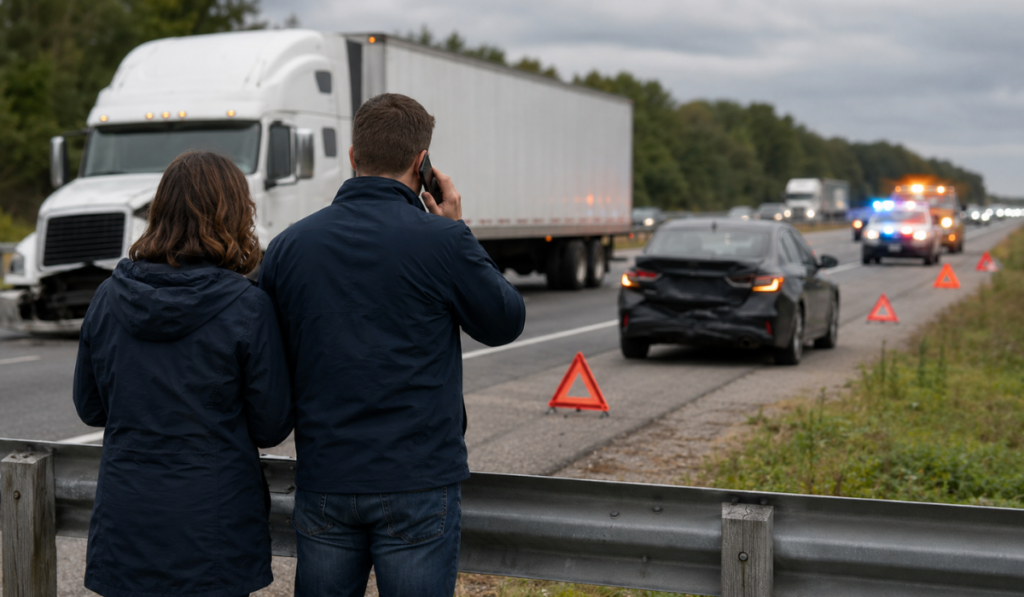
Your safety should come before photographs, witness information, or insurance concerns.
If you can move without worsening an injury, get away from moving traffic, leaking fuel, smoke, damaged cargo, or other hazards.
Turn on your hazard lights when appropriate and wait for emergency responders in a safe location.
Do not attempt to move if you have severe neck, back, or head pain unless remaining in place creates a greater danger. Follow the instructions provided by the 911 dispatcher.
Call 911 and provide:
- The location of the collision
- The number and types of vehicles involved
- Whether anyone appears injured
- Whether traffic is blocked
- Whether you see fire, fuel, or hazardous cargo
Do not assume someone else has already reported the crash.
Seek Medical Care Even If You Feel Fine
Some truck accident injuries are immediately noticeable, while others may take hours or days to produce symptoms. Shock and adrenaline can temporarily hide pain.
Possible injuries may include concussions, internal bleeding, fractures, spinal injuries, and soft-tissue damage. A brief examination at the crash scene may not identify every condition.
Seeking a complete medical evaluation can help protect your health and establish when your symptoms began.
When speaking with medical professionals, explain your symptoms accurately. Do not exaggerate your pain, but do not minimize it either.
Tell the provider if you hit your head, lost consciousness, felt dizzy, or developed pain in your neck, back, chest, or abdomen.
Follow all medical instructions and attend recommended follow-up appointments. If your symptoms change or worsen, report the changes to your healthcare provider.
Report the Truck Accident to the Police
Ask law enforcement to respond and prepare an official report. A police report may preserve basic information about the collision, including:
- The names of the drivers
- Vehicle and insurance details
- Witness contact information
- Weather and roadway conditions
- The vehicles’ locations
- Initial observations from the scene
Cooperate with the responding officer, but provide facts rather than guesses. If you do not know how fast the truck was traveling or exactly how far away it was, say that you do not know.
Avoid making conclusions about fault at the scene. An officer’s report may be important evidence, but it does not always provide the final answer about legal responsibility.
Before leaving, obtain the report number and ask how you can request a copy.
Document the Scene When It Is Safe
A truck accident scene can change quickly. Vehicles may be towed, debris removed, and damaged road barriers repaired.
If your physical condition allows, take photographs and videos before the scene changes.
Try to document:
- All involved vehicles from several angles
- Damage to the truck, trailer, and passenger vehicles
- Skid marks, debris, and fluid spills
- Traffic lights, road signs, and lane markings
- Construction zones or obstructed views
- Weather, lighting, and road conditions
- Visible injuries
Commercial truck details may help identify the companies connected to the vehicle. Take a photograph of the truck’s license plate, trailer number, company markings, and USDOT number when visible.
Do not walk into traffic, interfere with emergency responders, or put yourself at risk to gather evidence.
If your injuries prevent you from taking photographs, police records, witnesses, nearby cameras, and vehicle inspections may provide other information.
Ask Witnesses for Their Contact Information
Independent witnesses may have seen what occurred before the impact.
They might have observed the truck speeding, drifting between lanes, following too closely, losing cargo, or entering an intersection against a traffic signal.
If possible, ask witnesses for their:
- Full names
- Phone numbers
- Email addresses
- Brief description of what they observed
Also look for nearby businesses, homes, traffic cameras, and vehicles with dashboard cameras.
Video recordings may be erased or automatically recorded over, so identifying possible sources early can be important.
Do not pressure a witness to give a particular version of the event. Simply collect accurate contact information.
Be Careful About What You Say
People sometimes apologize after a collision even when they did not cause it.
Others may say they feel fine before delayed symptoms appear. These statements can later be misunderstood.
Stay calm and avoid arguing with the truck driver, company representative, or other motorists.
When speaking with police officers, emergency personnel, and medical providers, answer questions honestly and stick to what you know.
You should not hide relevant facts. However, you also do not need to guess about the cause of the crash, the speed of the vehicles, or the full extent of your injuries.
Notify Your Insurance Company
Your insurance policy may require timely notice of a collision. You can generally provide basic information such as the date, location, vehicles involved, and police report number.
Avoid guessing about fault or providing a final description of your injuries before your medical condition is understood. Keep copies of emails, forms, letters, and claim numbers related to the crash.
A commercial truck accident may involve several insurance policies. The truck, trailer, driver, cargo, and trucking operation may be connected to different companies. This can make the claim more complicated than a typical collision between two passenger vehicles.
Do Not Rush Into a Recorded Statement
The trucking company’s insurer may request a recorded statement or signed medical authorization soon after the crash.
Before agreeing, consider seeking legal advice, as incomplete statements or broad authorizations could affect your claim.
Always provide truthful information and understand any document before signing it.
Avoid Accepting an Early Settlement
An insurer may offer a settlement before your medical treatment is complete. Although an early payment may appear helpful, the offer might not account for future treatment, rehabilitation, lost income, or permanent physical limitations.
A settlement release generally ends the claim covered by the agreement. If additional injuries or expenses appear later, you may not be able to request further payment.
Do not make a final decision based only on your current medical bills. Review what the settlement covers, which parties it releases, and whether your condition is sufficiently understood.
Keep Your Documents Organized
You do not need a complicated recordkeeping system. Create one secure physical or digital folder and save documents as you receive them.
Useful records may include:
- Medical bills and treatment instructions
- Prescription and medical-equipment receipts
- Towing and vehicle-storage bills
- Repair estimates and vehicle photographs
- Rental transportation expenses
- Pay records showing missed work
- Police reports
- Insurance correspondence
- Accident-related travel expenses
You can also keep a simple journal describing symptoms, appointments, work restrictions, and changes in daily activities. Entries should be accurate and written regularly.
Avoid exaggerating or attempting to recreate detailed entries long after the events occurred.
Limit Social Media Activity
Social media content may be viewed outside its intended context. A single photograph or comment may be used to question how the collision occurred or how seriously you were injured.
Avoid posting about:
- The cause of the accident
- Who you believe was responsible
- Your medical treatment
- Insurance negotiations
- Physical activities during your recovery
Changing privacy settings does not guarantee that posts will remain private.
You should also avoid deleting existing accident-related content without legal advice, as relevant information may need to be preserved.
Understand Why Trucking Evidence Can Disappear
Important evidence may be controlled by the trucking company or another business rather than by the injured person.
A truck accident investigation may examine:
- Electronic logging device information
- Event data recorder or “black box” data
- GPS and dispatch records
- Dashboard camera footage
- Driver qualification and training files
- Inspection and maintenance reports
- Hours-of-service records
- Cargo-loading documents
- Shipping records and weight tickets
Not every case will involve all these records. Their availability will depend on the truck, the companies involved, and their record-retention practices.
A lawyer may send written preservation notices and use appropriate legal procedures to request relevant information. Acting promptly may reduce the risk that electronic information is overwritten or physical evidence is changed during vehicle repairs.
When Should You Contact a Truck Accident Lawyer?
Consider contacting a Truck Accident Lawyer as soon as reasonably possible when the crash caused injuries, involved a commercial carrier, or created a dispute about responsibility.
A lawyer may help:
- Identify the businesses connected to the truck
- Request the preservation of relevant evidence
- Review the police report and medical documentation
- Communicate with insurance companies
- Investigate whether several parties share responsibility
- Track applicable legal deadlines
Depending on the evidence, an investigation may consider the truck driver, motor carrier, vehicle owner, cargo loader, maintenance provider, or another company.
Contacting a lawyer does not guarantee that a claim will succeed, but it can help you understand the available options.
What Should You Bring to a Legal Consultation?
Bring any information you currently have, including:
- The police report or report number
- Photographs and videos
- Witness contact details
- Truck and trucking-company information
- Medical documents
- Insurance correspondence
- Repair or towing records
- Proof of missed work
- A written timeline of the accident
Do not delay contacting a lawyer simply because some documents are missing. The consultation can help identify additional information that may need to be requested.
Conclusion
After a truck accident, prioritize safety, obtain medical care, report the crash, and preserve available information.
Be careful when communicating with insurers, signing documents, or considering an early settlement. Timely action may help protect evidence and provide a clearer understanding of your legal options.
Discuss Your Truck Accident With Finch McCranie LLP
If you were injured in a commercial truck collision, Finch McCranie LLP can examine the circumstances, identify evidence that may need to be preserved, and explain the possible next steps.
Contact our legal team to discuss your concerns and learn more about your options for pursuing a potential truck accident claim.
Frequently Asked Questions
What if I could not photograph the truck accident?
Your medical needs come first. Police photographs, witness statements, surveillance recordings, towing documents, and vehicle inspections may help show what happened.
Should I talk to the trucking company’s insurer?
You may need to provide limited information, but be cautious about detailed or recorded statements. Consider consulting a lawyer before discussing fault, injuries, or settlement terms.
What if my symptoms began several days later?
Seek medical attention and explain when the symptoms started. Some injuries are not immediately apparent, but a qualified medical professional must determine their cause and severity.
Can more than one party be responsible?
Possibly. Responsibility may involve the driver, trucking company, cargo loader, maintenance contractor, vehicle owner, or another party, depending on the evidence.
Should I repair my vehicle immediately?
Ask whether the vehicle needs to be inspected before major repairs or disposal. Preserve photographs, repair estimates, towing records, and other documents related to its condition.