White Collar and Federal Criminal Defense

Opioid Prescriptions, Prosecution of Physicians, and the Mens Rea Dividing Line

opioids

In response to the opioid crisis, the Department of Justice (“DOJ”) has long prioritized prosecution of doctors prescribing opioids in violation of the Controlled Substances Act (“CSA”), 21 U.S.C. § 841.

Passed in 1971, the CSA is an expansive criminal statute originally designed to prosecute people involved with trafficking so-called street drugs—i.e., marijuana, heroine, cocaine, and the like.

Because the CSA was not created to target licensed medical doctors prescribing controlled substances with legitimate medical uses (e.g., opioids)—or to criminalize the provision of socially beneficial medical care more generally—there have long been questions about how to apply the CSA fairly in physician prosecutions.

(more…)


When a Privileged Conversation Isn’t: The Crime-Fraud Exception to Attorney-Client Privilege

a binder of files chained with a padlock

When the government investigates or prosecutes alleged corporate crime, a key question commonly emerges: Will the accused client waive attorney-client privilege and disclose relevant communications to the government?

This issue often arises because lawyers are routinely involved in corporate actions and decisions later subject to government scrutiny.  “The extensiveness and complexity

(more…)

“Extra Icing on a Cake Already Frosted”: The Supreme Court’s Continuing Concern with Overcriminalization

Extra Icing on a Cake Already Frosted

You know the Supreme Court of the United States feels strongly about an issue when, in the Court’s parlance, it adds “extra icing on a cake already frosted.”

That is, in effect, what the Court did in Van Buren v. United States (No.19-783), an opinion issued last Thursday in which the Court reversed the Eleventh Circuit Court of Appeals in a prosecution arising under the Computer Fraud and Abuse Act (CFAA).  After considering “the text, context, and structure” of the CFAA, the Court resolved the issue in dispute—i.e., the cake was “frosted.”  But the Court then added “extra icing” and emphasized—again—its profound concerns with federal prosecutors using broad federal criminal laws to target ordinary, seemingly innocent conduct.[1]

(more…)

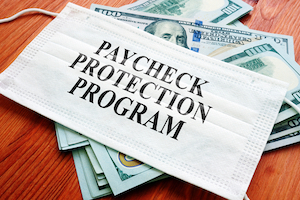
Predictions For Future PPP Fraud Prosecution By DOJ

PPP Fraud Prosecution

[Law360 published the below article by Finch McCranie partner, David Bouchard, on January 25, 2021.  The article concerns PPP fraud and enforcement.  Our white collar criminal defense team is deeply experienced in helping individuals and businesses navigate government investigations, enforcement actions, and prosecutions.  If you are contacted by a law enforcement or regulatory authority regarding a PPP loan or other business transaction, do not hesitate to contact our capable team.]

(more…)

What is the “trial penalty” in federal criminal cases and does it mean I shouldn’t take my case to trial?

trial penalty

Nobody accused of a federal crime should be penalized for exercising their Sixth Amendment right to trial.  And yet, because of the trial penalty, that happens all too often.[1]

(more…)

The Right to Confrontation in an Era of Videoconferences

Videoconferencing has skyrocketed in popularity because of the pandemic.  Just check Zoom’s stock.  Seemingly overnight, what used to be an irregular method of business communication has become commonplace.

Courts have embraced the craze, frequently holding hearings and other meetings by video.  But there are limits to what a court can permissibly accomplish by video.  While some observers have suggested videoconferencing is a potential solution to the problem of requiring live, in-person testimony during a pandemic spread by airborne particles, the Supreme Court of Michigan held in a recent criminal appeal that “two-way, interactive video testimony violated the defendant’s Confrontation Clause rights.”[1]

(more…)

DOJ’s Focus on PPP Fraud and Some Investigative Considerations in Evaluating a Client’s Exposure to Prosecution

In the early days of the Coronavirus pandemic, Congress passed relief legislation authorizing unprecedented federal aid to states, businesses, and individuals.  In short order, a torrent of federal spending flowed.  While those days may seem long gone as initial relief dollars have dried up and Congress is now debating additional relief programs, the Department of Justice (“DOJ”) remains focused on investigating and prosecuting fraud schemes arising from relief programs rolled out at the beginning of the pandemic.[1]

(more…)