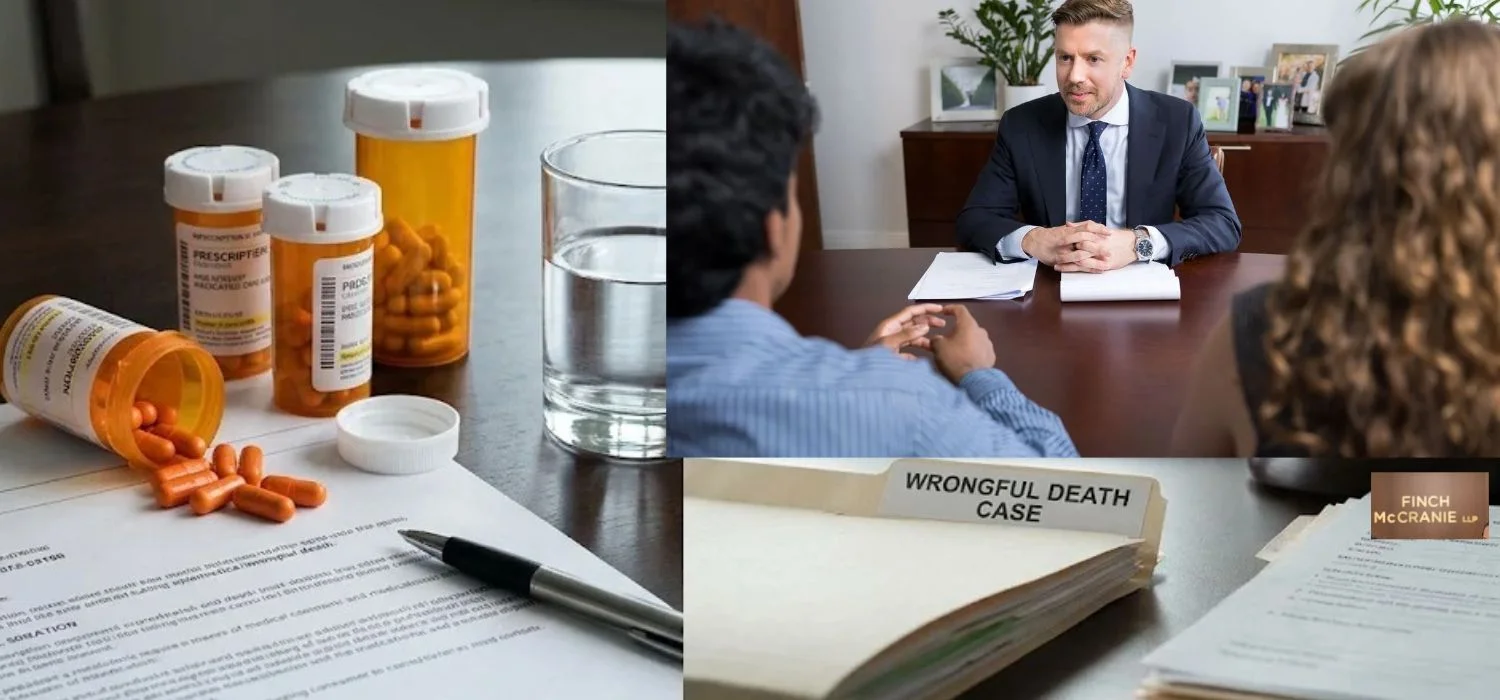
Losing a loved one in a tragic accident is a devastating blow—made even more painful when that death was due to someone else’s negligence or misconduct.
In the aftermath, families often face legal, financial, and emotional hurdles all at once.
That’s why hiring an experienced DuluthWrongful Death Lawyer is not just advisable — it’s essential.
At Finch McCranie LLP, we understand how overwhelming this time can be. (more…)
Experiencing the sudden loss of a loved one due to someone else’s negligence or intentional actions is a heartbreaking ordeal.
Beyond the emotional turmoil, families often face complex legal and financial challenges that can feel overwhelming during such a difficult time.
In Georgia, wrongful death laws are designed to provide compensation to surviving family members, but navigating these laws and ensuring justice is achieved can be daunting without professional guidance.
Surviving relatives may have the right to file a wrongful death claim when a loved one dies as a result of negligence, recklessness, or deliberate misconduct.
These lawsuits provide a way to hold the responsible party accountable and secure financial compensation for the losses endured by the family.
However, wrongful death compensation is not one-size-fits-all.
It is divided into two primary categories: economic damages and non-economic damages.
Few experiences in life are as heartbreaking as losing someone you love.
When that loss happens due to someone else’s negligence—whether in a car accident, workplace incident, or medical malpractice—it becomes even more devastating.
Families left behind often face overwhelming emotional pain, financial burdens, and legal complexities.
During such a time, many wonder: Should we handle this on our own or hire a wrongful death lawyer in Duluth? (more…)
How to find a wrongful death attorney is often the first question families ask after losing a loved one due to someone else’s negligence.
The emotional impact of a sudden loss can make legal decisions feel overwhelming, yet choosing the right legal representation is one of the most important steps in protecting your family’s rights.
Many people first try to understand what is wrongful death before exploring legal options.
In simple terms, wrongful death refers to a fatal incident caused by negligence, misconduct, or unsafe behavior. (more…)
Losing a loved one due to someone else’s negligence is an incredibly difficult experience.
During this emotional time, it can be overwhelming to deal with the legal aspects of pursuing a wrongful death claim.
A wrongful death lawyer in Duluth can help you navigate both the emotional and legal challenges, ensuring that your family receives the justice and compensation you deserve.
From understanding complex legal terms to providing the necessary support, an attorney specializing in wrongful death cases can make a significant difference in the outcome of your case. (more…)
Losing a loved one in a truck accident is devastating, especially when the accident could have been prevented.
Filing a wrongful death claim after a truck accident in Duluth is a critical legal step for families seeking justice and compensation for their loss.
A wrongful death lawsuit allows the family to hold responsible parties accountable and recover compensation for funeral expenses, lost wages, and emotional suffering. (more…)
A wrongful death lawyer in Georgia plays a critical role in protecting families after the devastating loss of a loved one caused by negligence or misconduct.
Beyond filing paperwork, legal counsel investigates the facts, preserves evidence, identifies liable parties, and pursues full compensation under Georgia law.
Losing a family member unexpectedly often creates emotional trauma alongside financial instability. (more…)
Losing a loved one due to medical negligence is one of the most devastating experiences anyone can face.
The emotional impact is compounded when you discover that the death could have been prevented with proper medical care.
In such circumstances, pursuing a wrongful death claim can offer both justice and financial relief, helping families heal while holding negligent healthcare providers accountable. (more…)
Wrongful death compensation is intended to provide financial stability and legal accountability after a family loses a loved one due to another party’s negligence or misconduct.
While no amount of money can replace a life, compensation plays a critical role in addressing lost income, emotional suffering, and the long-term impact on surviving family members.
Many families assume compensation is automatically divided equally or paid to a single person.
In reality, wrongful death damages distribution is governed by state law, court oversight, and the specific relationships involved. (more…)
Opioids can cause serious harm, including fatal respiratory depression, but an opioid-related death is not automatically medical malpractice. A wrongful-death case requires evidence that legally actionable conduct caused the death. The investigation must connect specific prescribing, dispensing or monitoring decisions to the outcome rather than rely on the drug’s risks alone.
At Finch McCranie LLP, our medical malpractice practice includes prescription drug errors and overdoses. When opioid treatment is involved, a careful review must account for the patient’s condition, treatment setting, available information and complete medication history.
Clinical Risk and Legal Responsibility Are Different Questions
Opioids have legitimate therapeutic uses. They also require patient-specific assessment because the consequences of treatment can vary with the drug, dose, other substances and health conditions. A legal review should examine how those considerations were handled without suggesting that prescribing an opioid is inherently negligent.
The CDC’s opioid prescribing guideline addresses adult outpatient pain care within a defined scope and emphasizes individual clinical judgment. It is not a universal legal rule for every hospital, cancer, sickle-cell, palliative or end-of-life setting. A guideline recommendation does not alone decide whether malpractice occurred.
Experts should consider the standards and information applicable when the care was delivered. A later warning or recommendation should not be treated as though it had necessarily governed an earlier prescription. The patient’s actual presentation and setting remain central.
Which Treatment Decisions Deserve Examination
Starting or Changing Therapy
The records may explain the reason for treatment, alternatives discussed, prior exposure and the intended follow-up. A dose increase should be considered alongside the clinical justification, observed response and information known at the time. A number viewed in isolation cannot establish negligence.
The review may also examine whether prescriptions from different clinicians were coordinated. Prescription drug monitoring information can contribute to that review, but access rules and the records’ completeness matter. A database entry is not a complete account of what the patient actually consumed.
Investigators may ask what each clinician knew about the other medications, what instructions were given and whether relevant information was communicated. Alcohol and nonprescribed substances may also affect the medical analysis. The goal is a complete account, not a presumption about the patient.
Reassessment and Response to Concerns
Reviewing follow-up means identifying what the patient reported, what findings were documented and what decisions followed. A missed appointment, early refill request or reported sedation may deserve examination, but none establishes the entire case alone.
Physical dependence, tolerance and opioid use disorder are not interchangeable terms. Treatment must be assessed without treating dependence as proof of misuse. Nor should concerns about risk be turned into advice to stop medication suddenly; federal safety guidance on discontinuation describes harms associated with abrupt or rapid changes in physically dependent patients. Treatment changes belong with qualified clinicians.
Proving Cause of Death Requires More Than a Drug Finding
A toxicology report can help identify substances detected in a sample. It does not independently establish who supplied them, the precise dose taken or whether a particular prescriber caused the death. Expert interpretation must account for the specimen and collection circumstances, medical history, other substances and relevant treatment.
The legal theory must identify both the alleged departure and its causal effect. For example, the analysis may concern whether a particular prescribing decision created an avoidable exposure or whether a documented change in condition required a different response. It must also address competing causes.
An accidental classification on a death certificate is not itself a determination that medical care was proper or negligent. Similarly, the absence of a criminal charge does not resolve a civil malpractice question. Each process asks different questions and applies different standards.
Build the Record Around the Entire Treatment Period
A useful record set may extend well before the final prescription. Earlier care can show the patient’s medical history, prior response, medication changes and communications among providers. The final event alone may not explain the treatment decisions being challenged.
Relevant sources may include:
Prescriber notes, treatment plans and documented reassessments.
Prescription histories, pharmacy records and applicable monitoring-program information.
Hospital medication administration and observation records.
Communications about refills, symptoms or treatment changes.
Emergency response, autopsy and toxicology materials where available.
The investigation should distinguish prescribed quantities from actual exposure. A filled prescription does not prove the entire quantity was taken, and a drug detected after death does not necessarily identify the source. If the history is incomplete, the limitation should be recognized rather than filled with assumptions.
Preserve containers, instructions and original communications. Family recollections may add context, especially about observed changes, but avoid attempting a medical diagnosis from memory. Document what was seen and when, leaving clinical interpretation to appropriately qualified professionals.
Assess Each Participant’s Role
A prescribing clinician, pharmacist, administering provider or healthcare facility may have relevant responsibilities. The scope of each role depends on the facts, applicable duties and relationships between the parties. Shared involvement does not establish shared negligence without evidence.
A pharmacy review may involve what information was available and how a particular concern was addressed. A facility review may concern administration, observation or communication rather than the initial outpatient prescription. These differences affect both the records needed and the experts appropriate to the claim.
Our broader article on prescription errors and wrongful death explains the medication-use chain. This article focuses on opioid-specific decisions, not every type of medication mistake or claims about manufacturers and public-health litigation.
Evaluate the Civil Claim Without Stigma or Assumptions
A history of substance use does not automatically defeat a claim or establish that a provider acted negligently. It may be important to risk assessment, causation and other legal issues, which require an evidence-based review. Counsel should be told about the complete history, including difficult or uncertain facts.
Georgia filing authority, expert requirements and deadlines still apply. A wrongful-death claimant and an estate representative may have different roles. Do not assume that waiting for an autopsy, insurer decision or regulatory investigation extends the time to bring a civil action.
Frequently Asked Questions
Does a fatal overdose automatically support a wrongful death lawsuit?
A fatal overdose alone does not establish a wrongful death claim. The evidence must show that someone owed the patient a legal duty, failed to meet that duty, and caused or contributed to the death. An investigation is needed to determine whether malpractice or another legally actionable failure occurred.
Can opioids be appropriate medical treatment?
Opioids can be appropriate when prescribed and managed according to the patient’s needs and clinical circumstances. Their risks do not make every prescription negligent. The review should focus on whether the treatment was appropriate for that patient and setting.
Does a higher dose prove negligent prescribing?
A higher dose alone does not prove negligence. The medication, patient’s medical history, and treatment circumstances all matter. A qualified expert can assess whether the prescribing decision was appropriate and whether it contributed to the death.
Is physical dependence the same as opioid use disorder?
Physical dependence and opioid use disorder are different conditions. Dependence is a physical adaptation that can develop during prescribed use. Opioid use disorder requires a separate clinical assessment, so the terms should not be used interchangeably.
Can toxicology results show exactly how much medication was taken?
A toxicology concentration does not, by itself, establish the exact amount taken. Its interpretation may depend on the specimen tested, the timing, and other medical or forensic factors. A qualified expert should explain what the results show and their limitations.
What if several clinicians prescribed medication to the patient?
The investigation should examine each clinician’s role, the information available to them, and their communications with other providers. Multiple prescriptions may raise concerns about coordination or monitoring, but they do not automatically establish negligence by every prescriber.
Why might pharmacy records differ from the medical chart?
Pharmacy records and medical charts document different parts of the treatment process and may be updated at different times. Any differences should be checked against the original prescriptions and communications between providers. Neither record should be assumed complete or accurate without review.
Do prescribing guidelines determine whether opioid treatment was negligent?
Prescribing guidelines can help inform an expert’s review, but their relevance depends on their scope, publication date, and application to the patient’s care. They do not replace the applicable legal standard or an assessment of the individual circumstances.
Should a family wait for a criminal investigation to finish before seeking legal advice?
Waiting for a criminal investigation to end could put relevant evidence or civil filing deadlines at risk. Families should not assume that a criminal proceeding extends the time to bring a civil claim. An attorney can assess deadlines and preservation needs while other investigations continue.
What should families gather before requesting a legal review?
Gather the names of known prescribers and pharmacies, treatment dates, available prescription records, and documents concerning the cause of death. Preserve original documents and clearly identify anything uncertain, including which medications the patient was known to have taken.
Request a Careful Review of the Opioid Treatment
The central issue is whether a supported failure in care caused the death, evaluated against the patient’s circumstances and the appropriate clinical and legal standards. Neither the risks of opioids nor assumptions about patient behavior can substitute for that analysis.
If you have concerns about a fatal outcome following opioid treatment, contact Finch McCranie LLP to discuss the records and timeline. Our attorneys can assess whether further medical and legal investigation is warranted.
A prescription error can support a wrongful-death claim when negligent medication-related care caused a patient’s death and the other legal requirements are met. A serious adverse reaction alone does not establish negligence. The investigation must identify what went wrong, who was responsible for that part of the process and how the failure affected the outcome.
At Finch McCranie LLP, our medical malpractice representation includes prescription drug errors and overdoses among the matters described on our service page. Reviewing a suspected fatal medication error requires connecting the prescription, dispensing record and actual treatment history, rather than assuming that the name on a bottle identifies the only potentially responsible party.
An Adverse Drug Event Is Not Automatically an Error
A medication may cause a known adverse effect despite appropriate care. An error concerns a failure in the medication-use process, such as an incorrect order or an avoidable breakdown in administration. A legal claim requires a supported professional or other duty, a breach, causation and recoverable harm.
The distinction matters when a patient had several illnesses or medications. A reaction occurring after a new prescription makes the timing worth investigating, but sequence alone does not establish cause. Records and expert interpretation must address the drug, patient, dose, timing and alternative explanations.
The FDA’s medication-error overview recognizes that errors can arise across prescribing, communication, dispensing, administration and monitoring. That broader process provides a useful way to organize questions without assuming that every participant committed malpractice.
Follow the Medication Through Each Stage
Prescribing and Order Communication
The review begins with the clinical reason for the drug and the actual order. Relevant questions may concern strength, dose, route, frequency, duration and patient-specific information available to the prescriber. A handwritten note, electronic order and later change may need to be reconciled.
The investigation should distinguish an inappropriate clinical choice from an accurate choice communicated incorrectly. Whether allergy information or another prescription was available at the time can affect the analysis. A later discovery should not be treated as something every provider necessarily knew earlier.
Dispensing and Labeling
The pharmacy record may establish what prescription was received, what product was selected and what instructions accompanied it. Comparing the written directions with the medication actually supplied can help identify a wrong-drug, wrong-strength or labeling concern.
Pharmacist responsibility depends on the applicable professional duties and facts. It should not be described as a universal guarantee that every interaction will be detected. Experts may need to assess the information available to the pharmacy, communications with the prescriber and the handling of a particular concern.
Administration and Monitoring
A correctly prescribed and dispensed medication can still be administered incorrectly. Hospital or facility records may show when a dose was given, by what route and whether another dose was documented. At home, the available history may be less complete and require careful reconstruction.
Monitoring questions depend on the treatment and patient. The issue is what reassessment or follow-up was appropriate in the actual circumstances, not whether every medication required the same tests or schedule. Changes in the patient’s condition and communications about those changes may be important.
Preserve Records That Can Reveal the Breakdown
Different participants hold different parts of the story. A patient-portal medication list may show prescribed therapy without proving what was dispensed or administered. A billing record may show a transaction without establishing the patient took the drug.
Potentially relevant materials include:
The original prescription and documented changes or cancellations.
Pharmacy dispensing history, labels, receipts and related communications.
Medication administration records and relevant electronic information.
Clinical assessments, laboratory results and follow-up instructions.
Emergency treatment records, cause-of-death documentation and available toxicology.
Keep original containers, packaging and written directions as they are. Photograph identifying information if useful, and ask counsel about appropriate preservation and handling. Do not test, consume or distribute remaining medication to investigate the event yourself.
When preparing a timeline, distinguish prescribed doses, doses known to have been taken and doses inferred from incomplete information. A pill count may contribute to the investigation without proving precisely when or by whom medication was used.
Establishing That the Error Caused the Death
Causation requires more than identifying an incorrect prescription. A qualified expert may need to explain whether the medication exposure caused or contributed to the fatal event and how appropriate care would have changed the outcome under the applicable legal standard.
Toxicology findings must be interpreted in context. The specimen, collection timing, other substances, treatment and medical history can affect meaning. A result should not be labeled “fatal” based only on an internet range or an isolated laboratory value.
The investigation may also consider an omitted medication, delayed treatment or a failure to respond to a complication. An error can concern the absence of needed treatment as well as the administration of the wrong treatment. Each theory needs its own clinical and legal support.
A prescriber, pharmacy, administering clinician or facility may have different duties. Institutional responsibility can also depend on employment relationships and evidence of the facility’s own conduct. A communication failure does not justify naming every business in the care chain without examining its role.
An investigation should identify the relevant legal entities early. A retail name, hospital system and professional practice may be separate organizations. Records requests, preservation and filing decisions should reflect those distinctions rather than rely only on a logo or a clinician’s workplace.
At Finch McCranie LLP, our medical-malpractice approach includes medical-record collection and expert review. In a medication matter, the appropriate investigation depends on the records and specialties needed; a general description of our practice does not replace case-specific evaluation.
Wrongful-Death Procedure Still Matters
Even compelling medication evidence does not answer who may file. Georgia distinguishes the statutory wrongful-death claimant from an estate representative pursuing separate recoverable losses. Filing authority, deadlines and any required expert affidavit must be evaluated for the actual claims.
Do not wait for a pharmacy, hospital or insurer to finish an internal review before seeking advice about civil deadlines. A complaint or voluntary investigation does not necessarily preserve them. Providing available information promptly can allow legal and clinical review to proceed together.
Frequently Asked Questions
Can negligence occur even when the correct medication was prescribed?
Prescribing the correct medication is only one part of safe treatment. Errors may involve the dosage, instructions, administration, or monitoring. A review should also consider the patient’s medical history and any known risks.
Does a new symptom after starting a prescription prove the medication caused it?
A new symptom may raise concerns, but timing alone does not prove that the medication caused it. Medical review is needed to assess the underlying illness, other medications, and treatment history before drawing conclusions.
What if the prescription label and discharge instructions disagree?
Keep both documents and note when you received each one. Conflicting instructions may reveal a problem with how medication information was communicated or checked. A qualified expert can assess whether the discrepancy contributed to the death.
Can a pharmacy be responsible if it filled the prescription exactly as written?
Filling a prescription accurately does not resolve every question about a pharmacy’s professional responsibilities. Its role depends on the information available and the duties that applied in the circumstances. Supplying the medication alone does not establish liability.
Do electronic drug interaction alerts prove negligence?
An interaction alert does not establish negligence on its own. Its significance depends on the warning, the patient’s circumstances, and the clinical judgment involved. A review should determine who received the alert, how it was handled, and whether that response was appropriate.
What if the patient took more medication than directed?
The investigation should examine how much medication was taken and the circumstances surrounding its use. Clear instructions, patient conduct, foreseeable risks, and provider decisions may all matter. Taking more than directed does not, by itself, resolve every question about responsibility.
Should the family discard any remaining medication?
Before discarding potentially relevant medication, ask an attorney how it should be preserved. Keep it securely stored in its original container, along with labels and related records. Any questions about a living patient’s medication use should be directed to their treating healthcare professional.
Can a regulator’s report replace medical expert testimony?
A regulator’s report may provide useful evidence, but it does not automatically satisfy the requirements of a civil claim. Qualified experts may still need to explain whether the care fell below the applicable standard and whether that failure caused or contributed to the death.
Can a claim be investigated if the patient died outside a hospital?
A death at home or in an outpatient setting does not automatically rule out a claim. The investigation should examine the medication, the instructions provided, and relevant treatment decisions. Care given before the patient left a facility may also be important.
How does an opioid case differ from other prescription error cases?
Opioid cases require careful review of prescribing decisions, patient risks, monitoring, and toxicology findings. As with other medication-related claims, the evidence must establish the provider’s duty, a failure to meet that duty, and a connection to the death.
Identify the Error Before Assigning Responsibility
A useful medication investigation connects the order, supplied product, actual administration and clinical outcome. It also tests alternative explanations and identifies which participant had the relevant duty at each stage.
If you suspect a medication error contributed to a loved one’s death, contact Finch McCranie LLP to discuss the prescriptions, treatment timeline and available records. Our attorneys can evaluate what additional medical and legal review may be needed.