Personal Injury & Wrongful Death

Signed a Consent Form but the Surgery Went Wrong? Understanding Medical Malpractice

Signed a consent form medical malpractice issues often surface after a surgical procedure results in serious injury or loss of life. 

Families are frequently told that the outcome was an accepted risk, leaving them unsure whether legal action is even possible.

In personal injury and wrongful death cases, however, the presence of a consent form does not end the legal inquiry.

From an injury law perspective, the critical question is not whether a patient signed paperwork but whether the medical provider caused avoidable harm through negligent conduct.
(more…)

Wrongful Death Compensation: Who Gets What and How It’s Decided

Wrongful death compensation is intended to provide financial stability and legal accountability after a family loses a loved one due to another party’s negligence or misconduct. 

While no amount of money can replace a life, compensation plays a critical role in addressing lost income, emotional suffering, and the long-term impact on surviving family members.

Many families assume compensation is automatically divided equally or paid to a single person. 

In reality, wrongful death damages distribution is governed by state law, court oversight, and the specific relationships involved.
(more…)

Common Types of Dental Malpractice: Trends, Risks, and When to Contact an Attorney

Common types of dental malpractice form the foundation of many professional negligence claims brought by patients who suffer preventable injuries during dental care. 

From a legal standpoint, these cases are not driven by dissatisfaction or discomfort alone. 

They arise when a dentist’s actions fall below accepted professional standards and cause harm that could have been avoided through proper care.

Modern dentistry has expanded rapidly, with increased reliance on implants, cosmetic procedures, sedation, and advanced technology.
(more…)

How Dental Malpractice Lawsuits Succeed in Court

Dental malpractice lawsuits are won in court when attorneys demonstrate that a dentist’s actions fell outside accepted professional standards and caused avoidable harm to a patient. 

From a legal standpoint, these cases are not about dissatisfaction or imperfect results; they are about proving negligence through evidence, expert interpretation, and clear causation.

Dentists are afforded professional discretion, and courts do not second-guess medical judgement lightly. 

For that reason, dental malpractice cases demand careful legal
(more…)

Automated Truck Accidents: Attorneys Explain the Risks of Public Road Testing

Automated truck accidents are becoming an increasing concern as self-driving and semi-autonomous commercial vehicles are tested on public highways alongside everyday drivers. 

As trucking and technology companies promote automation as the future of transportation, the reality is that these systems are still experimental and when they fail, the consequences can be catastrophic.

Unlike closed testing environments, public roads present unpredictable variables: human drivers, pedestrians, cyclists, construction zones, weather changes, and sudden traffic events. 


When automated trucking systems are deployed before they are fully reliable, the public effectively becomes part of a live experiment often without consent or warning. 

Attorneys who handle serious truck crash litigation are increasingly warning that premature public road testing exposes motorists to unnecessary risk and creates complex legal questions when accidents occur.

Why Public Road Testing Raises Serious Safety Concerns

Public highways are uncontrolled environments. 

Contrary to test tracks, they involve unpredictable behavior from other drivers, sudden lane closures, emergency vehicles, and weather-related hazards. 

Self-driving truck testing risks increase dramatically when automated systems must interpret these variables in real time.

Autonomous trucking safety concerns are amplified by the size and weight of commercial vehicles. 

A system error that might cause a minor collision in a passenger vehicle can result in devastating injuries when an 80,000-pound truck is involved.

Why Automated Truck Accident Cases Are Legally Complex

Automated truck accidents rarely involve a single responsible party. Liability may be shared among trucking companies, technology providers, contractors, and drivers. 

Accessing critical evidence, such as proprietary software data adds another layer of complexity.

Defense teams often argue that no clear legal standards apply, making these cases aggressively contested. 

Automated truck accident attorney involvement is critical to preserving evidence and establishing accountability early.

Evidence in Automated Truck Accident Lawsuits

Evidence plays a decisive role in automated truck accident lawsuits, often determining whether victims can successfully prove fault in cases involving complex technology and multiple corporate defendants. 

Unlike traditional truck crashes, these cases rely heavily on digital and electronic data generated by automated driving systems and data that is rarely accessible without immediate legal intervention.

Automated trucks operate using interconnected hardware, software, and remote systems, evidence exists across multiple platforms. 

Identifying, preserving, and interpreting this information requires swift action and technical expertise.

Sensor Logs and Perception Data

Automated trucks rely on sensors such as cameras, radar, and lidar to detect vehicles, obstacles, lane markings, and traffic conditions. 

Sensor logs record what the system saw in the moments leading up to a crash. 

These records can reveal whether the automated system failed to recognize a stopped vehicle, misjudged distance, or incorrectly classified a hazard.

Sensor data is critical to determining whether the crash resulted from a perception failure rather than human error. 

Without access to these logs, defendants may argue that the system performed as designed and shift blame elsewhere.

System Diagnostics and Event Data

Automated trucks continuously generate system diagnostics that track performance, warnings, and faults. 

These records may show software malfunctions, sensor outages, delayed responses, or system disengagements immediately before an accident.

Event data can also indicate whether the vehicle attempted emergency braking, issued alerts to a safety driver, or experienced internal errors. 

This information is essential for reconstructing how the crash occurred and whether the automated system responded appropriately.

Software Update and Version Histories

Software governs how automated trucks interpret data and make driving decisions. 

Software update histories can reveal whether the system was operating on an outdated or experimental version at the time of the crash.

In some cases, manufacturers deploy updates to correct known safety issues.

If a crash occurs before those updates are implemented or if the update itself introduces a defect software records may support claims of negligent deployment or product liability.

Video Footage and Camera Recordings

Automated trucks often record video from multiple angles, including forward-facing cameras, side views, and sometimes interior monitoring of the safety driver. 

This footage can capture lane changes, braking behavior, traffic signals, and the actions of other vehicles.

Video evidence provides real-time context that cannot be replicated through reports or witness testimony alone. 

However, video data is frequently overwritten unless preserved quickly, making early legal demands essential.

Remote Monitoring and Fleet Management Data

Many automated truck operations involve remote monitoring centers that track vehicle location, performance, and system status in real time. 

Remote monitoring data may show whether operators were actively supervising the vehicle or responding to system alerts.

This information can help establish whether adequate oversight was in place during testing and whether remote operators failed to intervene when problems arose.

Human Override and Safety Driver Records

When automated trucks require human supervision, records related to safety drivers become critical. 

These may include training logs, work schedules, fatigue records, and engagement data showing whether the driver was attentive or distracted.

Evidence may also reveal delayed handoffs between automated systems and human control, a common factor in automated truck accidents. 

These records can support claims of inadequate training or unsafe testing protocols.

Why Evidence Control Creates an Unequal Playing Field

In automated truck accident cases, nearly all critical evidence is controlled by corporate defendants, including trucking companies and technology developers. 

Victims rarely have independent access to system data, making them dependent on legal discovery to uncover the truth.

Without prompt legal action, companies may claim data was automatically deleted, overwritten, or proprietary. 

This imbalance makes early attorney involvement essential to preserving evidence and preventing spoliation.

The Importance of Immediate Legal Action

Prompt legal action allows attorneys to issue preservation notices, seek court orders, and secure expert access to digital evidence before it is lost. 

Early intervention also helps prevent selective disclosure, where only favorable data is produced.

In automated truck accident lawsuits, evidence preservation is not a procedural detail, it is often the difference between accountability and denial. 

Acting quickly helps ensure that the full story of what happened is preserved and available for independent analysis.

How Automated Truck Accidents Impact Injury and Wrongful Death Claims

Commercial autonomous truck crashes frequently result in severe injuries due to vehicle size and speed. 

Victims may suffer traumatic brain injuries, spinal damage, or fatal trauma.

Wrongful death claims involving autonomous vehicle testing accidents raise additional questions about experimental risk, corporate decision-making, and whether public testing placed profit ahead of safety.

Why Attorneys Warn Against Premature Public Road Testing

Attorneys representing crash victims consistently warn that innovation should not outpace safety. 

Public road testing effectively shifts risk from corporations to everyday drivers.

Without stronger oversight and accountability, automated truck accidents will continue to expose the public to unnecessary danger. 

Litigation plays a critical role in forcing transparency and improving safety standards.

Legal Options for Victims of Automated Truck Accidents

Victims may pursue personal injury claims, product liability lawsuits, or wrongful death actions depending on the severity of harm. 

In some cases, multiple defendants may be named due to shared responsibility.

Understanding trucking accident liability autonomous vehicles requires experienced legal guidance capable of navigating both transportation law and emerging technology issues.

The Future of Autonomous Trucking and Legal Accountability

Automated trucking is expected to expand rapidly. 

As deployment increases, so will autonomous truck accidents unless regulations and accountability evolve.

The legal system will continue shaping how responsibility is assigned and how public safety is protected as technology advances.

Conclusion

Automated truck accidents highlight the dangers of introducing experimental technology onto public roads without sufficient safeguards. 

Since automation may offer future benefits, current testing practices expose motorists to unacceptable risks. Accountability not innovation alone must remain the priority.

Injured in an Automated Truck Accident? Speak With an Attorney

Automated truck crash cases involve complex technology, multiple defendants, and aggressive corporate defense strategies. 

Early legal action is critical to preserving evidence and protecting your rights. 

Finch McCranie LLP represents victims harmed by emerging transportation risks and fights to hold negligent companies accountable.

Frequently Asked Questions 

What are automated truck accidents?

Automated truck accidents involve commercial vehicles using self-driving or semi-autonomous technology that collide with other vehicles, objects, or pedestrians. These crashes often occur when automated systems fail to correctly interpret road conditions or when human oversight breaks down.

Why is testing automated trucks on public roads risky?

Public roads present unpredictable conditions such as construction zones, weather changes, and human driving behavior. Automated systems are still developing and may not respond reliably to these variables, increasing the risk of serious crashes.

Who can be held responsible in an automated truck accident?

Liability may extend to trucking companies, technology developers, safety drivers, or third-party contractors. Responsibility depends on whether the crash resulted from system design flaws, negligent testing, or human supervision failures.

How are automated truck accident cases different from traditional truck crashes?

These cases often involve multiple defendants and complex technical evidence such as software logs and sensor data. Determining fault requires expert analysis and early legal action to preserve digital records.

What types of injuries result from automated truck accidents?

Injuries may include traumatic brain injuries, spinal cord damage, internal organ injuries, or fatal trauma. The size and weight of commercial trucks often make these crashes especially severe.

What evidence is important in an automated truck accident lawsuit?

Critical evidence may include vehicle sensor data, system diagnostics, video recordings, and software update histories. This information is often controlled by corporate defendants and must be preserved quickly.

Can families file wrongful death claims after an automated truck crash?

When automated truck accidents result in fatal injuries, surviving family members may pursue wrongful death claims. These cases examine whether negligent testing or defective technology contributed to the death.

Why do attorneys warn against premature autonomous truck testing?

Attorneys emphasize that public road testing exposes motorists to experimental technology without their consent. Without clear regulations and accountability, these practices can place profit ahead of public safety.

When should an attorney be contacted after an automated truck accident?

Legal counsel should be contacted as soon as possible after a crash. Early involvement helps secure evidence, identify responsible parties, and protect the injured person’s legal rights.

Different Types of TBIs Caused by Truck Accidents and Your Legal Options

Traumatic brain injuries from truck accidents often leave victims and families overwhelmed, uncertain, and unsure where to turn next.

In our experience as attorneys, many clients come to us not because they immediately wanted to file a lawsuit, but because they needed answers, clarity, and protection while dealing with a life-altering injury.

Truck-related brain injuries are medically complex and legally challenging.

Victims may look fine on the outside while struggling with memory loss, emotional changes, or the inability to return to work. 
(more…)

Why Survivors Deserve More Than Silence: The Role of Dash Cam Evidence in Truck Accidents

Dash cam evidence in truck accidents has become one of the most powerful tools survivors have to protect the truth after a devastating collision. 

When commercial trucks are involved, victims and families are often forced to stand alone against trucking companies that control critical evidence, employ rapid-response legal teams, and shape the narrative within hours of a crash. Video footage changes that balance.

Unlike statements that can be challenged or rewritten, dash cam footage captures what actually happened.
(more…)

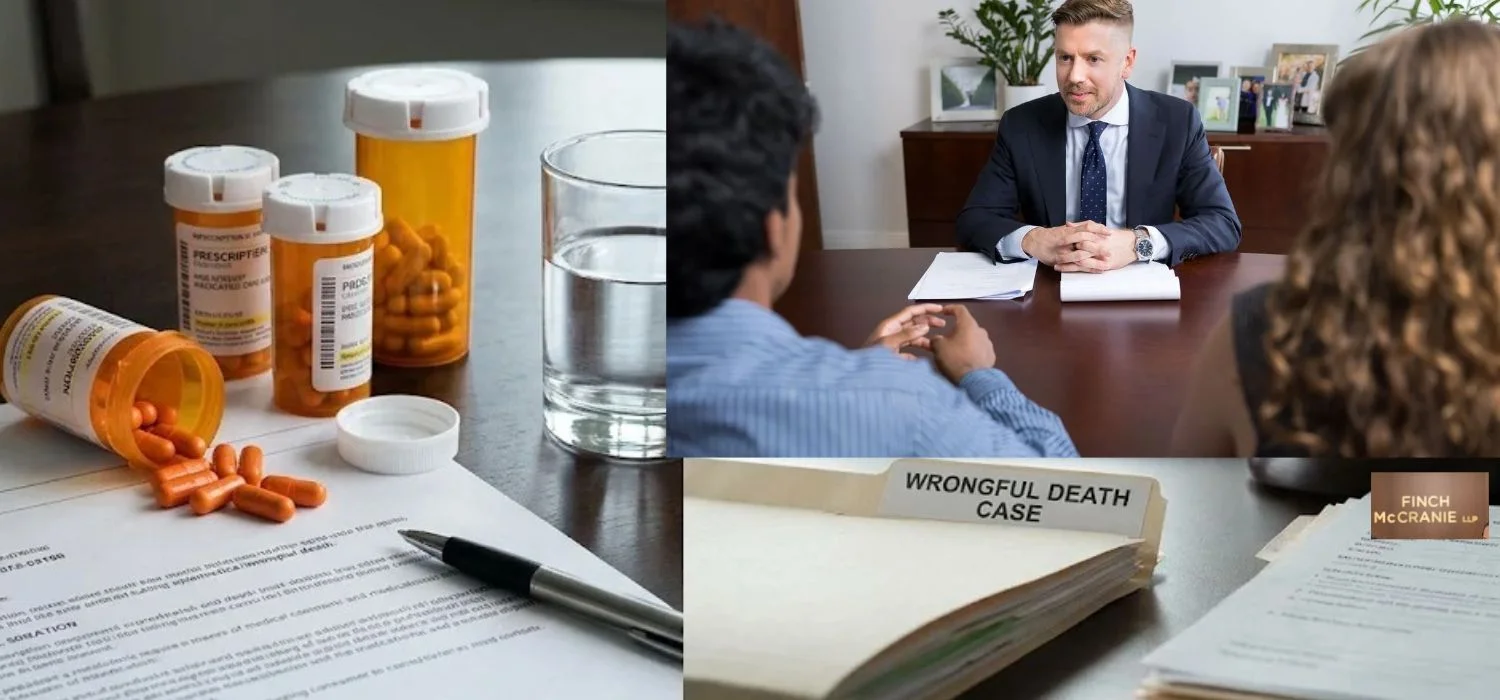
What Are the Risks of Opioids and When Do They Qualify as Wrongful Death Cases?

Opioids can cause serious harm, including fatal respiratory depression, but an opioid-related death is not automatically medical malpractice. A wrongful-death case requires evidence that legally actionable conduct caused the death. The investigation must connect specific prescribing, dispensing or monitoring decisions to the outcome rather than rely on the drug’s risks alone.

At Finch McCranie LLP, our medical malpractice practice includes prescription drug errors and overdoses. When opioid treatment is involved, a careful review must account for the patient’s condition, treatment setting, available information and complete medication history.

What Are the Risks of Opioids and When Do They Qualify as Wrongful Death Cases?

Clinical Risk and Legal Responsibility Are Different Questions

Opioids have legitimate therapeutic uses. They also require patient-specific assessment because the consequences of treatment can vary with the drug, dose, other substances and health conditions. A legal review should examine how those considerations were handled without suggesting that prescribing an opioid is inherently negligent.

The CDC’s opioid prescribing guideline addresses adult outpatient pain care within a defined scope and emphasizes individual clinical judgment. It is not a universal legal rule for every hospital, cancer, sickle-cell, palliative or end-of-life setting. A guideline recommendation does not alone decide whether malpractice occurred.

Experts should consider the standards and information applicable when the care was delivered. A later warning or recommendation should not be treated as though it had necessarily governed an earlier prescription. The patient’s actual presentation and setting remain central.

Which Treatment Decisions Deserve Examination

Starting or Changing Therapy

The records may explain the reason for treatment, alternatives discussed, prior exposure and the intended follow-up. A dose increase should be considered alongside the clinical justification, observed response and information known at the time. A number viewed in isolation cannot establish negligence.

The review may also examine whether prescriptions from different clinicians were coordinated. Prescription drug monitoring information can contribute to that review, but access rules and the records’ completeness matter. A database entry is not a complete account of what the patient actually consumed.

Combining Medications and Other Substances

The FDA warns about serious risks when benzodiazepines are used with opioids, including severe respiratory depression and death. Whether a particular combination was appropriate still requires clinical context; the presence of both medications does not automatically prove a breach.

Investigators may ask what each clinician knew about the other medications, what instructions were given and whether relevant information was communicated. Alcohol and nonprescribed substances may also affect the medical analysis. The goal is a complete account, not a presumption about the patient.

Reassessment and Response to Concerns

Reviewing follow-up means identifying what the patient reported, what findings were documented and what decisions followed. A missed appointment, early refill request or reported sedation may deserve examination, but none establishes the entire case alone.

Physical dependence, tolerance and opioid use disorder are not interchangeable terms. Treatment must be assessed without treating dependence as proof of misuse. Nor should concerns about risk be turned into advice to stop medication suddenly; federal safety guidance on discontinuation describes harms associated with abrupt or rapid changes in physically dependent patients. Treatment changes belong with qualified clinicians.

Proving Cause of Death Requires More Than a Drug Finding

A toxicology report can help identify substances detected in a sample. It does not independently establish who supplied them, the precise dose taken or whether a particular prescriber caused the death. Expert interpretation must account for the specimen and collection circumstances, medical history, other substances and relevant treatment.

The legal theory must identify both the alleged departure and its causal effect. For example, the analysis may concern whether a particular prescribing decision created an avoidable exposure or whether a documented change in condition required a different response. It must also address competing causes.

An accidental classification on a death certificate is not itself a determination that medical care was proper or negligent. Similarly, the absence of a criminal charge does not resolve a civil malpractice question. Each process asks different questions and applies different standards.

Build the Record Around the Entire Treatment Period

A useful record set may extend well before the final prescription. Earlier care can show the patient’s medical history, prior response, medication changes and communications among providers. The final event alone may not explain the treatment decisions being challenged.

Relevant sources may include:

  • Prescriber notes, treatment plans and documented reassessments.
  • Prescription histories, pharmacy records and applicable monitoring-program information.
  • Hospital medication administration and observation records.
  • Communications about refills, symptoms or treatment changes.
  • Emergency response, autopsy and toxicology materials where available.

The investigation should distinguish prescribed quantities from actual exposure. A filled prescription does not prove the entire quantity was taken, and a drug detected after death does not necessarily identify the source. If the history is incomplete, the limitation should be recognized rather than filled with assumptions.

Preserve containers, instructions and original communications. Family recollections may add context, especially about observed changes, but avoid attempting a medical diagnosis from memory. Document what was seen and when, leaving clinical interpretation to appropriately qualified professionals.

Assess Each Participant’s Role

A prescribing clinician, pharmacist, administering provider or healthcare facility may have relevant responsibilities. The scope of each role depends on the facts, applicable duties and relationships between the parties. Shared involvement does not establish shared negligence without evidence.

A pharmacy review may involve what information was available and how a particular concern was addressed. A facility review may concern administration, observation or communication rather than the initial outpatient prescription. These differences affect both the records needed and the experts appropriate to the claim.

Our broader article on prescription errors and wrongful death explains the medication-use chain. This article focuses on opioid-specific decisions, not every type of medication mistake or claims about manufacturers and public-health litigation.

Evaluate the Civil Claim Without Stigma or Assumptions

A history of substance use does not automatically defeat a claim or establish that a provider acted negligently. It may be important to risk assessment, causation and other legal issues, which require an evidence-based review. Counsel should be told about the complete history, including difficult or uncertain facts.

Georgia filing authority, expert requirements and deadlines still apply. A wrongful-death claimant and an estate representative may have different roles. Do not assume that waiting for an autopsy, insurer decision or regulatory investigation extends the time to bring a civil action.

Frequently Asked Questions

Does a fatal overdose automatically support a wrongful death lawsuit?

A fatal overdose alone does not establish a wrongful death claim. The evidence must show that someone owed the patient a legal duty, failed to meet that duty, and caused or contributed to the death. An investigation is needed to determine whether malpractice or another legally actionable failure occurred.

Can opioids be appropriate medical treatment?

Opioids can be appropriate when prescribed and managed according to the patient’s needs and clinical circumstances. Their risks do not make every prescription negligent. The review should focus on whether the treatment was appropriate for that patient and setting.

Does a higher dose prove negligent prescribing?

A higher dose alone does not prove negligence. The medication, patient’s medical history, and treatment circumstances all matter. A qualified expert can assess whether the prescribing decision was appropriate and whether it contributed to the death.

Is physical dependence the same as opioid use disorder?

Physical dependence and opioid use disorder are different conditions. Dependence is a physical adaptation that can develop during prescribed use. Opioid use disorder requires a separate clinical assessment, so the terms should not be used interchangeably.

Can toxicology results show exactly how much medication was taken?

A toxicology concentration does not, by itself, establish the exact amount taken. Its interpretation may depend on the specimen tested, the timing, and other medical or forensic factors. A qualified expert should explain what the results show and their limitations.

What if several clinicians prescribed medication to the patient?

The investigation should examine each clinician’s role, the information available to them, and their communications with other providers. Multiple prescriptions may raise concerns about coordination or monitoring, but they do not automatically establish negligence by every prescriber.

Why might pharmacy records differ from the medical chart?

Pharmacy records and medical charts document different parts of the treatment process and may be updated at different times. Any differences should be checked against the original prescriptions and communications between providers. Neither record should be assumed complete or accurate without review.

Do prescribing guidelines determine whether opioid treatment was negligent?

Prescribing guidelines can help inform an expert’s review, but their relevance depends on their scope, publication date, and application to the patient’s care. They do not replace the applicable legal standard or an assessment of the individual circumstances.

Should a family wait for a criminal investigation to finish before seeking legal advice?

Waiting for a criminal investigation to end could put relevant evidence or civil filing deadlines at risk. Families should not assume that a criminal proceeding extends the time to bring a civil claim. An attorney can assess deadlines and preservation needs while other investigations continue.

What should families gather before requesting a legal review?

Gather the names of known prescribers and pharmacies, treatment dates, available prescription records, and documents concerning the cause of death. Preserve original documents and clearly identify anything uncertain, including which medications the patient was known to have taken.

Request a Careful Review of the Opioid Treatment

The central issue is whether a supported failure in care caused the death, evaluated against the patient’s circumstances and the appropriate clinical and legal standards. Neither the risks of opioids nor assumptions about patient behavior can substitute for that analysis.

If you have concerns about a fatal outcome following opioid treatment, contact Finch McCranie LLP to discuss the records and timeline. Our attorneys can assess whether further medical and legal investigation is warranted.

Can Prescription Errors Cause Wrongful Death? Drug Negligence Explained

A prescription error can support a wrongful-death claim when negligent medication-related care caused a patient’s death and the other legal requirements are met. A serious adverse reaction alone does not establish negligence. The investigation must identify what went wrong, who was responsible for that part of the process and how the failure affected the outcome.

At Finch McCranie LLP, our medical malpractice representation includes prescription drug errors and overdoses among the matters described on our service page. Reviewing a suspected fatal medication error requires connecting the prescription, dispensing record and actual treatment history, rather than assuming that the name on a bottle identifies the only potentially responsible party.

Can Prescription Errors Cause Wrongful Death? Drug Negligence Explained

An Adverse Drug Event Is Not Automatically an Error

A medication may cause a known adverse effect despite appropriate care. An error concerns a failure in the medication-use process, such as an incorrect order or an avoidable breakdown in administration. A legal claim requires a supported professional or other duty, a breach, causation and recoverable harm.

The distinction matters when a patient had several illnesses or medications. A reaction occurring after a new prescription makes the timing worth investigating, but sequence alone does not establish cause. Records and expert interpretation must address the drug, patient, dose, timing and alternative explanations.

The FDA’s medication-error overview recognizes that errors can arise across prescribing, communication, dispensing, administration and monitoring. That broader process provides a useful way to organize questions without assuming that every participant committed malpractice.

Follow the Medication Through Each Stage

Prescribing and Order Communication

The review begins with the clinical reason for the drug and the actual order. Relevant questions may concern strength, dose, route, frequency, duration and patient-specific information available to the prescriber. A handwritten note, electronic order and later change may need to be reconciled.

The investigation should distinguish an inappropriate clinical choice from an accurate choice communicated incorrectly. Whether allergy information or another prescription was available at the time can affect the analysis. A later discovery should not be treated as something every provider necessarily knew earlier.

Dispensing and Labeling

The pharmacy record may establish what prescription was received, what product was selected and what instructions accompanied it. Comparing the written directions with the medication actually supplied can help identify a wrong-drug, wrong-strength or labeling concern.

Pharmacist responsibility depends on the applicable professional duties and facts. It should not be described as a universal guarantee that every interaction will be detected. Experts may need to assess the information available to the pharmacy, communications with the prescriber and the handling of a particular concern.

Administration and Monitoring

A correctly prescribed and dispensed medication can still be administered incorrectly. Hospital or facility records may show when a dose was given, by what route and whether another dose was documented. At home, the available history may be less complete and require careful reconstruction.

Monitoring questions depend on the treatment and patient. The issue is what reassessment or follow-up was appropriate in the actual circumstances, not whether every medication required the same tests or schedule. Changes in the patient’s condition and communications about those changes may be important.

Preserve Records That Can Reveal the Breakdown

Different participants hold different parts of the story. A patient-portal medication list may show prescribed therapy without proving what was dispensed or administered. A billing record may show a transaction without establishing the patient took the drug.

Potentially relevant materials include:

  • The original prescription and documented changes or cancellations.
  • Pharmacy dispensing history, labels, receipts and related communications.
  • Medication administration records and relevant electronic information.
  • Clinical assessments, laboratory results and follow-up instructions.
  • Emergency treatment records, cause-of-death documentation and available toxicology.

Keep original containers, packaging and written directions as they are. Photograph identifying information if useful, and ask counsel about appropriate preservation and handling. Do not test, consume or distribute remaining medication to investigate the event yourself.

When preparing a timeline, distinguish prescribed doses, doses known to have been taken and doses inferred from incomplete information. A pill count may contribute to the investigation without proving precisely when or by whom medication was used.

Establishing That the Error Caused the Death

Causation requires more than identifying an incorrect prescription. A qualified expert may need to explain whether the medication exposure caused or contributed to the fatal event and how appropriate care would have changed the outcome under the applicable legal standard.

Toxicology findings must be interpreted in context. The specimen, collection timing, other substances, treatment and medical history can affect meaning. A result should not be labeled “fatal” based only on an internet range or an isolated laboratory value.

The investigation may also consider an omitted medication, delayed treatment or a failure to respond to a complication. An error can concern the absence of needed treatment as well as the administration of the wrong treatment. Each theory needs its own clinical and legal support.

Our guide to medical negligence resulting in death addresses the broader proof and claim structure. Opioid-specific prescribing and monitoring issues are addressed separately in our article on opioid risks and wrongful-death cases.

Responsibility May Involve Several Participants

A prescriber, pharmacy, administering clinician or facility may have different duties. Institutional responsibility can also depend on employment relationships and evidence of the facility’s own conduct. A communication failure does not justify naming every business in the care chain without examining its role.

An investigation should identify the relevant legal entities early. A retail name, hospital system and professional practice may be separate organizations. Records requests, preservation and filing decisions should reflect those distinctions rather than rely only on a logo or a clinician’s workplace.

At Finch McCranie LLP, our medical-malpractice approach includes medical-record collection and expert review. In a medication matter, the appropriate investigation depends on the records and specialties needed; a general description of our practice does not replace case-specific evaluation.

Wrongful-Death Procedure Still Matters

Even compelling medication evidence does not answer who may file. Georgia distinguishes the statutory wrongful-death claimant from an estate representative pursuing separate recoverable losses. Filing authority, deadlines and any required expert affidavit must be evaluated for the actual claims.

Do not wait for a pharmacy, hospital or insurer to finish an internal review before seeking advice about civil deadlines. A complaint or voluntary investigation does not necessarily preserve them. Providing available information promptly can allow legal and clinical review to proceed together.

Frequently Asked Questions

Can negligence occur even when the correct medication was prescribed?

Prescribing the correct medication is only one part of safe treatment. Errors may involve the dosage, instructions, administration, or monitoring. A review should also consider the patient’s medical history and any known risks.

Does a new symptom after starting a prescription prove the medication caused it?

A new symptom may raise concerns, but timing alone does not prove that the medication caused it. Medical review is needed to assess the underlying illness, other medications, and treatment history before drawing conclusions.

What if the prescription label and discharge instructions disagree?

Keep both documents and note when you received each one. Conflicting instructions may reveal a problem with how medication information was communicated or checked. A qualified expert can assess whether the discrepancy contributed to the death.

Can a pharmacy be responsible if it filled the prescription exactly as written?

Filling a prescription accurately does not resolve every question about a pharmacy’s professional responsibilities. Its role depends on the information available and the duties that applied in the circumstances. Supplying the medication alone does not establish liability.

Do electronic drug interaction alerts prove negligence?

An interaction alert does not establish negligence on its own. Its significance depends on the warning, the patient’s circumstances, and the clinical judgment involved. A review should determine who received the alert, how it was handled, and whether that response was appropriate.

What if the patient took more medication than directed?

The investigation should examine how much medication was taken and the circumstances surrounding its use. Clear instructions, patient conduct, foreseeable risks, and provider decisions may all matter. Taking more than directed does not, by itself, resolve every question about responsibility.

Should the family discard any remaining medication?

Before discarding potentially relevant medication, ask an attorney how it should be preserved. Keep it securely stored in its original container, along with labels and related records. Any questions about a living patient’s medication use should be directed to their treating healthcare professional.

Can a regulator’s report replace medical expert testimony?

A regulator’s report may provide useful evidence, but it does not automatically satisfy the requirements of a civil claim. Qualified experts may still need to explain whether the care fell below the applicable standard and whether that failure caused or contributed to the death.

Can a claim be investigated if the patient died outside a hospital?

A death at home or in an outpatient setting does not automatically rule out a claim. The investigation should examine the medication, the instructions provided, and relevant treatment decisions. Care given before the patient left a facility may also be important.

How does an opioid case differ from other prescription error cases?

Opioid cases require careful review of prescribing decisions, patient risks, monitoring, and toxicology findings. As with other medication-related claims, the evidence must establish the provider’s duty, a failure to meet that duty, and a connection to the death.

Identify the Error Before Assigning Responsibility

A useful medication investigation connects the order, supplied product, actual administration and clinical outcome. It also tests alternative explanations and identifies which participant had the relevant duty at each stage.

If you suspect a medication error contributed to a loved one’s death, contact Finch McCranie LLP to discuss the prescriptions, treatment timeline and available records. Our attorneys can evaluate what additional medical and legal review may be needed.

Why Insurance Claims Get Denied and How an Attorney Can Help

Insurance claim denied situations can be both confusing and financially overwhelming, especially when policyholders expect coverage only to face delays, disputes, or outright rejection.

Many people assume insurance exists to provide protection during difficult times, yet insurers frequently deny claims based on technicalities, exclusions, or contested interpretations of policy language.

In this blog, we discuss why insurance claims get denied and how legal representation can help. 

We also explain how policyholders can protect their rights, challenge unfair decisions, and
(more…)

Wrongful Death Attorney in Duluth: How These Cases Are Built, Valued, and Won

Whenever a preventable death happens, families are often left dealing with sudden questions, financial pressure, and uncertainty about what steps to take next. 

In these difficult moments, contacting a wrongful death attorney in Duluth becomes important because the right legal guidance can help families understand what happened, who may be responsible, and whether a Georgia wrongful death claim may be available.

A wrongful death case is not built on assumptions. It requires evidence, investigation, expert review, and a clear strategy for proving liability and damages. 

(more…)

Seriously Injured in a Semi-Truck Crash in Duluth? Here’s What Your Case Could Involve

A semi-truck injury lawyer near me is often one of the first searches injured people make after a serious truck crash leaves them facing emergency medical care, missed work, vehicle damage, insurance calls, and uncertainty about who may be responsible. In Duluth and across Georgia, semi-truck accident cases can be more complicated than ordinary car accident claims because they may involve a commercial driver, trucking company, maintenance provider, cargo loader, vehicle owner, contractor, commercial insurer, or multiple other parties.

A serious semi-truck crash can affect a person’s health, income, mobility, and long-term quality of life. The legal case may involve evidence that must be preserved quickly, including driver logs, black box data, inspection records, electronic logging device data, maintenance records, dispatch records, and company safety documents. Federal Motor Carrier Safety Administration guidance explains that electronic logging devices synchronize with a vehicle engine to automatically record driving time, which can make this information important in truck accident investigations.

(more…)

Before Choosing Lawyers for Wrongful Death Understand Your Family’s Filing Rights

Lawyers for wrongful death can help Georgia families understand who has the legal right to file a claim after a preventable fatal loss.
Before choosing an attorney, it is important to know that Georgia wrongful death law does not allow every relative to file a case.
The right to bring a claim may depend on whether the person who died left a surviving spouse, children, parents, or an estate representative.

After a loved one dies because of a crash, medical error, unsafe property condition, defective product, or another wrongful act, family members may feel pressure to act quickly.
They may search for a wrongful death attorney near me, ask whether compensation may be available, or wonder how the legal process begins.
Those questions are understandable, but the first issue is often filing authority.

(more…)

What Famous Medical Malpractice Lawsuits Can Teach You About Your Own Case

Famous cases of medical malpractice can help patients and families understand how medical errors, legal proof, expert testimony, and damages may affect a medical malpractice claim.
While high-profile lawsuits often involve unusual facts or major verdicts, the legal lessons behind them can apply to many ordinary patients who believe a doctor, hospital, nurse, or healthcare provider caused serious harm.

Medical malpractice cases are not based only on a bad medical outcome.
A patient usually must show that a healthcare provider failed to meet the accepted standard of care and that this failure caused measurable injury.
That means medical records, expert opinions, timelines, and evidence all matter.

(more…)

Medical Malpractice in Duluth: Signs You Have a Case, How to Find the Right Lawyer, and Potential Compensation

A medical malpractice lawyer near me is often the first search patients make when they believe a medical error caused serious harm, worsened their condition, or led to the loss of a loved one.
In Duluth, Georgia, patients and families may have questions after a delayed diagnosis, surgical error, medication mistake, birth injury, hospital discharge issue, or failure to treat a serious condition.
Not every poor medical outcome is malpractice, but some injuries happen because a healthcare provider failed to follow the accepted standard of care.
When that failure causes measurable harm, the patient may have the right to pursue a medical malpractice claim.

(more…)

Wrongful Death Claims in Georgia: What Surviving Families Need to Know Before Filing

A wrongful death attorney can help surviving families in Georgia understand whether they may have a legal claim after a preventable fatal loss. When a loved one dies because of another person’s negligence, reckless conduct, medical error, unsafe property condition, or wrongful act, the family may be left with grief, financial pressure, unanswered questions, and uncertainty about what to do next. In these moments, understanding the basics of Georgia wrongful death law can help families make informed decisions before important deadlines pass.

(more…)

Why Choose Finch McCranie LLP as Your Misdiagnosis Lawyer in Atlanta, GA?

A misdiagnosis lawyer atlanta patients and families contact can help determine whether a wrong, missed, or delayed diagnosis may support a medical malpractice claim in Georgia. When a medical condition is not diagnosed correctly, the consequences can be serious. A patient may lose valuable treatment time, go through unnecessary treatment, experience a worsened condition, or face a life-changing outcome that could have been prevented with proper care.

Not every incorrect diagnosis is medical malpractice. Some illnesses are difficult to diagnose, symptoms may overlap, and medical providers sometimes have to make decisions with limited information. However, when a healthcare provider fails to act as a reasonably careful provider would under similar circumstances, and that failure causes harm, the situation may raise legal concerns.

(more…)

What Happens After a Tanker Truck Accident in Atlanta and Why Immediate Legal Help Matters

A tanker truck accident lawyer atlanta victims contact can help protect evidence, explain legal options, and review who may be responsible after a serious commercial tanker crash. Tanker truck accidents in Atlanta can be far more complex than ordinary vehicle collisions because these vehicles may carry fuel, chemicals, gases, industrial liquids, or other hazardous materials. When a tanker truck crashes, the result may involve fires, spills, rollovers, chemical exposure, severe injuries, road closures, and long investigations.

For injured drivers, passengers, pedestrians, motorcyclists, and families, the aftermath can feel overwhelming. Emergency crews may secure the area, hazardous materials teams may respond, police may begin investigating, and the trucking company or insurance carrier may start gathering evidence quickly. During this time, victims may be focused on medical treatment while critical crash evidence begins to disappear.

(more…)

What Counts as Medical Negligence Resulting in Death? A Guide to Definitions, Evidence, and Payouts

Medical negligence resulting in death involves more than a patient dying after treatment. A supported claim must identify a departure from the applicable standard of care and establish a legally sufficient connection between that failure and the death. The family must also determine who has authority to bring each available claim.

At Finch McCranie LLP, our medical malpractice representation includes reviewing medical evidence and obtaining appropriate expert input. For a fatal outcome, the investigation must distinguish the effects of the underlying illness from harm attributable to the alleged treatment failure.

What Counts as Medical Negligence Resulting in Death? A Guide to Definitions, Evidence, and Payouts

Distinguishing Negligence From an Adverse Outcome

A known complication, unsuccessful procedure or difficult diagnosis does not automatically establish negligence. The question is whether the provider met the standard applicable to the circumstances, based on the information reasonably available when the care was delivered.

Potential concerns include a failure to follow up on an abnormal result, an inappropriate medication decision or an inadequate response to deterioration. Each concern needs clinical context. An infection after surgery, for example, is not enough by itself to prove a breach; the investigation may examine prevention, recognition and treatment separately.

A family’s observations are valuable starting points. They can identify symptoms reported to staff, conversations about test results or changes after discharge. Those accounts should be compared with original records and expert analysis, rather than treated as a substitute for the medical proof.

What Must Connect the Treatment Failure to Death

The investigation generally addresses duty, breach, causation and damages. These are related questions, but evidence supporting one does not automatically answer the others. A clear documentation problem can exist even when the medical evidence does not show that it changed the outcome.

Causation often requires examining what would probably have happened with appropriate care. An expert should identify a supported treatment opportunity and explain its relationship to the fatal outcome. It is not enough to say that earlier treatment might have helped in some unspecified way.

Delayed Diagnosis and Deterioration

A delayed-diagnosis review may ask when a condition should reasonably have been recognized, what treatment was available then and whether the delay caused the death. Later knowledge should not be projected backward as though every finding was apparent at the first appointment.

The same care is needed when reviewing deterioration. A timeline should separate when a symptom appeared, when it was reported, when staff assessed it and when an intervention occurred. That sequence may be more informative than a broad allegation that a hospital “did nothing.”

Emergency treatment may involve a different liability standard. Our article on proving medical malpractice in emergency room cases explains why the setting and patient’s condition need separate analysis.

Evidence That Helps Answer the Family’s Questions

A useful medical record set extends beyond a discharge summary. It may include admission notes, nursing observations, medication records, laboratory results, original imaging, consultation notes and the final hospitalization. Earlier and later records can help evaluate the patient’s baseline health and the progression of illness.

Death certificates, autopsy findings and toxicology reports may contribute to the causation analysis. None should be assumed to answer every treatment question. The stated medical cause of death and whether a provider negligently caused that death are different issues.

Finch McCranie LLP’s investigation approach includes obtaining records and imaging and, in appropriate cases, examining audit information and communications. These materials can help reconstruct who knew what and when. Expert review is needed to interpret their clinical significance.

A practical family chronology should identify the date, source and basis of each entry. Preserve original messages and documents rather than editing them into a persuasive narrative. If something is uncertain, mark it as uncertain. A reliable account is more useful than a confident reconstruction that later conflicts with the record.

Wrongful Death and Estate Claims Are Distinct

A Georgia wrongful-death claim generally concerns the full value of the deceased person’s life. An estate-related claim may address legally recoverable losses associated with the injury and death, including certain expenses and, where supported, conscious pain and suffering before death. These claims should not be collapsed into one list of family losses.

The individuals authorized to pursue them may differ. A person serving as estate representative does not automatically displace the statutory wrongful-death claimant. Our wrongful death representation addresses these responsibilities alongside the evidence of the underlying alleged negligence.

Who May Have Authority to File

O.C.G.A. § 51-4-2 generally places the wrongful-death right with a surviving spouse or, if there is no surviving spouse, the deceased person’s child or children. Other provisions govern circumstances involving parents and a personal representative. Family relationships, the age of the deceased and other statutory conditions matter.

An unmarried partner, sibling or relative should not assume that being a close caregiver creates filing authority. The appropriate legal representative should be identified promptly, particularly where family members disagree or an estate has not been opened. Authority to obtain records also needs its own review.

Understanding “Payouts” Without Relying on an Average

No average payment can establish what a particular medical-negligence death claim is worth. Liability evidence, causation, the applicable damages framework, available coverage and litigation risks all affect evaluation. Some investigations establish no viable claim at all.

Wrongful-death evidence can concern economic and intangible aspects of the deceased person’s life. Estate evidence may concern medical expenses and experiences before death. Supporting documents must match the particular claim; the same loss should not be counted twice under different labels.

A settlement figure is also different from the amount ultimately distributed. Fees, litigation expenses, valid reimbursement interests, allocation among claims and distribution rules may require attention. These issues should be explained using the actual proposed resolution, not assumed percentages or an online calculator.

Deadlines and Expert Review Require Early Attention

Georgia’s medical malpractice limitation statute generally includes a two-year period tied to injury or death and a separate five-year repose period tied to the alleged negligent act or omission. Exceptions and accrual questions can alter the analysis. Death does not necessarily create a fresh period that overrides every other timing rule.

A professional-malpractice complaint also generally requires a qualifying expert affidavit. Obtaining records and locating an appropriate expert can take time. An attorney should evaluate the potential claims and deadlines while investigating, rather than wait for every record or an autopsy report before considering timing.

Frequently Asked Questions

Can a claim exist if the patient already had a serious illness?

Yes, an existing illness does not automatically excuse negligent care. The evidence must establish that the alleged failure caused legally actionable harm, including its connection to death, rather than attributing the underlying disease to the provider.

Does an autopsy have to identify malpractice?

No. An autopsy addresses medical findings and may help clarify cause of death. Whether treatment violated the standard of care usually requires a broader review of clinical records and qualified expert opinions.

Can I investigate if I do not have the full chart?

Yes. Start with the dates, facilities, provider names and documents available to you. An attorney can assess authorization and requests for additional records without assuming that a patient-portal download is complete.

Is a hospital’s apology an admission of liability?

Not necessarily. The exact communication and applicable evidence rules matter. Preserve what was said and any written message, but do not rely on an apology alone to establish duty, breach or causation.

What if an emergency provider and a later specialist were involved?

Their care should be evaluated separately within the overall timeline. Different treatment settings, information and legal standards may apply, even when both encounters concern the same illness.

Can the wrongful-death claimant also be the estate representative?

Yes, one person may hold both roles when legally appropriate. The roles and claims remain distinct, and the person must have the authority required for each.

Does a death certificate determine who can sue?

No. It may help document the death and reported cause, but filing authority comes from the applicable law and family circumstances. Estate appointment documents may also be relevant.

Is a high income required for a meaningful wrongful-death claim?

No. Georgia’s full-value-of-life framework is not limited to a wage calculation. The evidence and applicable law determine the recoverable components without reducing a person’s life to employment status.

Can a family complaint replace a lawsuit?

No. A complaint to a facility or regulator serves a different purpose. Do not assume an internal review, grievance or correspondence preserves a civil filing deadline.

What questions should families ask during the first consultation?

Ask who may bring each claim, which records are needed, what expert review may be appropriate and which deadlines require attention. Also ask how the investigation and any litigation expenses would be handled under the engagement terms.

Seek Answers Through a Structured Review

A sound evaluation separates the medical explanation for death, the alleged treatment failure, the causal link and the claims available to the proper parties. It also treats compensation as a fact-specific legal question rather than a predictable payout.

If you believe negligent medical care contributed to a loved one’s death, contact Finch McCranie LLP to discuss the timeline and the records available. Our attorneys can review the concerns and explain the next investigative steps.

A Family’s Guide to Filing a Wrongful Death Lawsuit and Finding the Right Lawyer

A wrongful death lawsuit lawyer near me is often searched by families who are grieving a sudden loss and trying to understand whether negligence may have caused their loved one’s death. After a fatal accident, medical error, truck crash, unsafe property incident, defective product, or another preventable event, families may feel overwhelmed by legal questions, insurance calls, medical records, and financial pressure.

A wrongful death lawsuit is a civil legal claim that may help eligible family members pursue accountability after a fatal loss caused by another party’s wrongful act or negligence. In Georgia, wrongful death damages are connected to the “full value of the life” of the person who died, which is a key part of how these claims are evaluated under Georgia law.

(more…)
Secret Link